The Nature of Porcupines
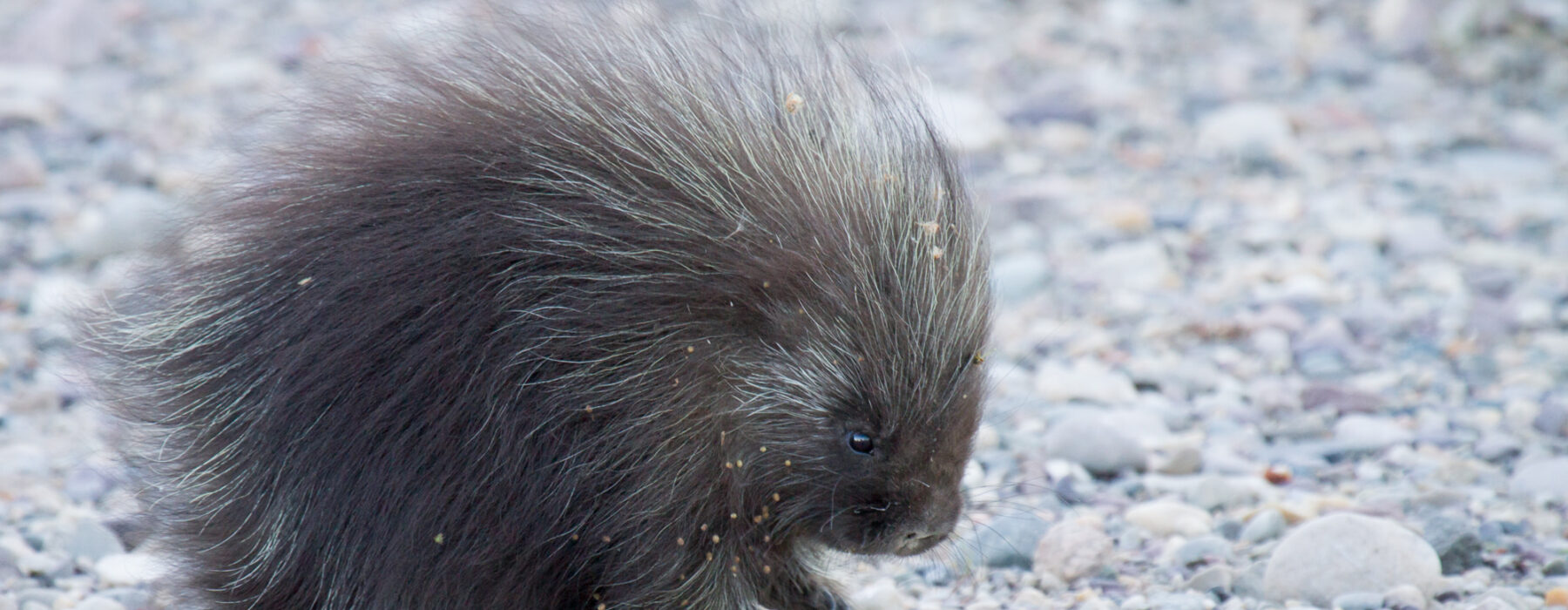
When we installed the Universal Access (UA) Trail at the Nature Center, back in 2023, we knew it would fill a critical gap for people who use mobility devices and otherwise need a sturdy, wide trail. We also knew it would appeal to folks who didn’t think they needed an accessible trail. Sure enough, it quickly became a favorite for short lunch break walks, tick avoidance, and mud season, as well as for parents with strollers, and folks who just appreciate the views from this beautiful trail. But there was one user group we didn’t anticipate — porcupines! It turns out porcupines love the UA Trail, much to the delight of everyone who comes upon one waddling around a bend.
One July morning, a porcupine wandered up the trail to the kiosk, checked out the interpretive materials (Ok, maybe that’s a stretch), and headed for the yurt, where it walked right up the ramp before deciding it would rather go around than over. The next day, I spotted what I’m guessing was the same one napping on a high branch in a tree nearby, and the following week a coworker leaving after an evening event watched one cross the pollinator garden and head down the walkway. Later in the summer a jogger out for an evening run spotted a porcupine puttering down the UA Trail ahead of him, and snapped a photo to
share with us.
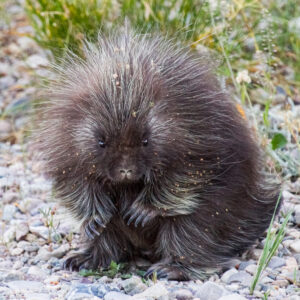 It makes sense that porcupines take advantage of our trails and walkways, especially the wide flat ones like the UA Trail — they’re so close to the ground, with wide bodies and short legs, that instead of footprints they leave a full body belly drag in the snow in winter. With a maximum speed of two miles per hour on flat ground, walking through tall, dense vegetation is very slow going for them. Plus they aren’t worried about sharing trails with humans because they know we’ll give them and their 30,000-plus quills plenty of space.
The North American Porcupine is the second largest rodent on the continent, coming in just after the beaver. Unusually for rodents, they are strict herbivores, eating leaves, grasses, stems, flowers, berries, and nuts during the growing season and cambium (the living inner bark of trees) and evergreen needles in the winter. This diet is low in salt, so porcupines have to meet their sodium needs elsewhere — sometimes by chewing wood that has absorbed human sweat, like axe handles, canoe paddles, and even outhouse seats.
Despite being slow on the ground, porcupines are good climbers and surprisingly good swimmers. They climb trees to search for food and rest safely, and den in boulder slopes, rock ledges, and large hollow trees. And yes, porcupines do fall from those tiny tree-top branches — one study that captured and X-rayed porcupines found that nearly a third of them had healed fractures from falling out of trees. Another danger of falling from trees is quilling themselves. Renowned porcupine biologist Uldis Roze discovered that porcupine quills contain an antibiotic that prevents quill wounds from becoming infected, presumably for this reason.
And now for my favorite porcupine fact: baby porcupines are called porcupettes, something that brings me almost as much joy as seeing a porcupine waddling into sight. They are born in late spring, with soft quills that harden within hours. Porcupines have only one, or rarely two, young at a time. The porcupette spends about six months with its mother before venturing out on its own in late fall. Maybe one day, if we’re very lucky, we’ll see a porcupine and porcupette duo make their way across NBNC’s meadow on the UA Trail.