The North Branch River
Ecology & Conservation of our Waters and Watershed
Ecology & Conservation of our Waters and Watershed
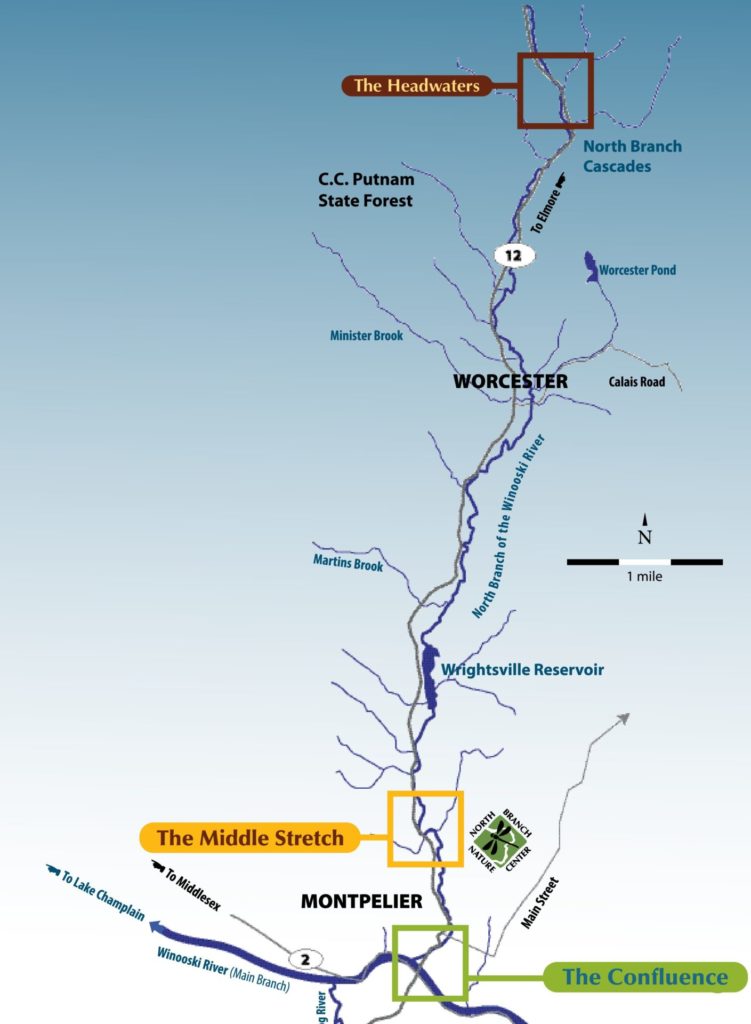
A watershed is any area that drains all its water to a common destination. A watershed can be a puddle in the driveway after a rainstorm, or all the land on the continent that drains to the same ocean. Every piece of land belongs to many watersheds nested within one another. The land here at North Branch Nature Center, for example, belongs to the North Branch watershed and the Winooski River watershed, and the Lake Champlain watershed and the Saint Lawrence River Watershed and the Atlantic Ocean watershed. By finding our place in a watershed, we can learn how water (and all the nutrients, wildlife, and pollution it carries) arrives from upstream, and how our decisions may impact everything downstream.
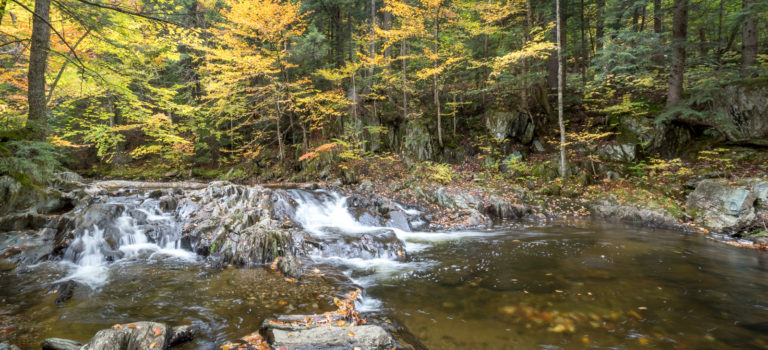
North Branch Cascades is a great example of the upper reaches of a healthy watershed. Nestled in the mountains, the river is narrow and shallow, flowing down steep slopes and through deep forest. Here we find cold temperatures, lots of shade, and fast-moving water oxygenated from many small waterfalls. The riverbottom is made up of rocks and pebbles. There is often less development in the upper reaches of a watershed, so the river tends to be clean and clear. Aquatic life in the headwaters is diverse and full of organisms that are very sensitive to pollutants.
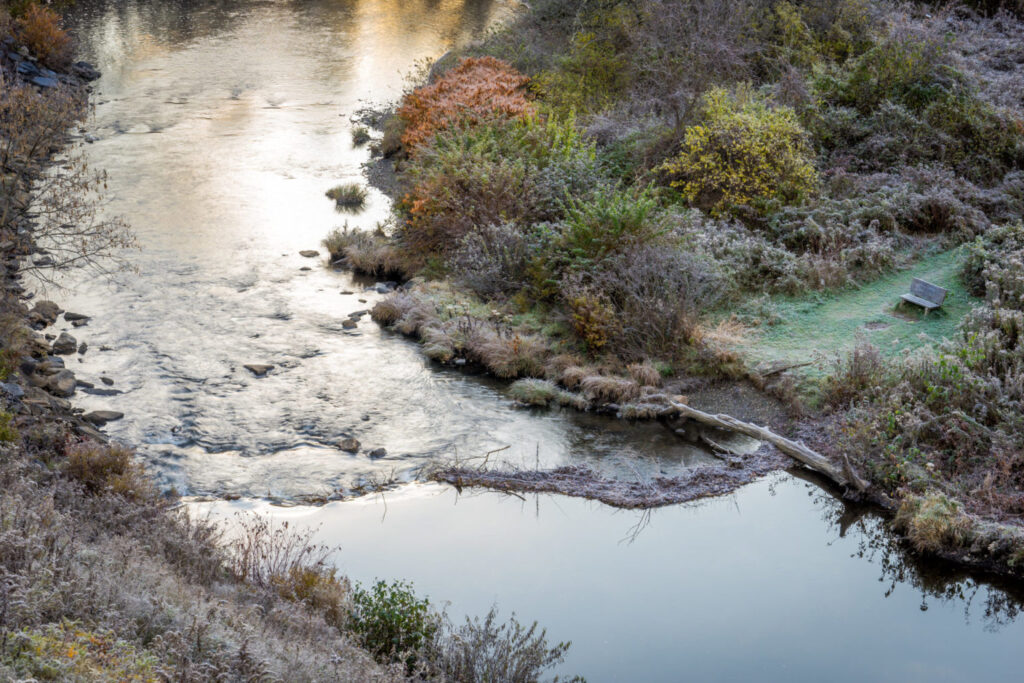
Situated between the headwaters upstream and the mouth downstream, this section of the North Branch of the Winooski River exhibits the classic diversity of a river’s “middle” section. The grade of the river has flattened out, so it now meanders naturally through the landscape. The twists and turns create diverse habitats ranging from turbulent riffles to fast straightaways to deep, lazy pools. Some areas are shaded, while others are in the sun. The diversity of human-caused threats also increases as the river runs past more development and agriculture.
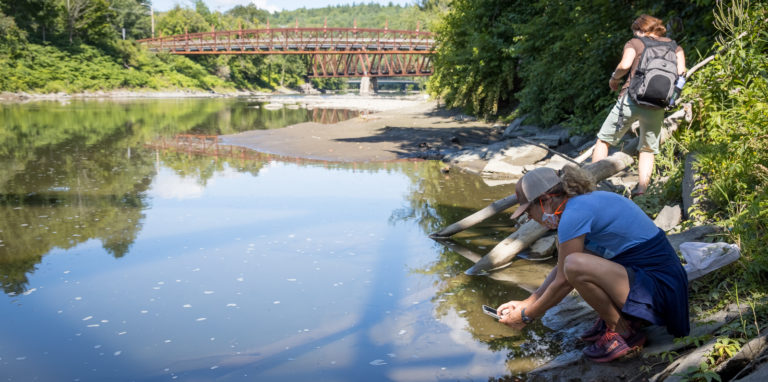
The North Branch flows into the main branch of the Winooski River in downtown Montpelier. At the site where the rivers flow together (their confluence), the water moves more slowly and deposits sand and silt carried from upstream. The water is warmer because of limited shade, and waterfalls and riffles are rare. All the nutrients, pollution, and sediments originating upstream flow through here. Aquatic life must tolerate less oxygen, higher temperatures, and more pollution. Towns are often centered around confluences, making these areas of both great vulnerability and great opportunity.
 The wild area between a riverbank and the developed land beyond is called a riparian buffer. Wide buffers protect the watershed by slowing and filtering runoff into the river, stabilizing the banks from erosion via strong root systems, shading the water, and providing food and nutrients to aquatic life. Riparian buffers are also critical movement corridors for wildlife. Birds and mammals travel these areas to access different habitats that are otherwise cut off by human development.
 Rivers are always picking up and dropping off materials. Where the river moves fast, earth is excavated away — the more powerful the current, the larger the transported material. When the current slows, material settles onto the riverbottom. Healthy rivers are always carving new channels and excavating new banks. Healthy rivers wander, regularly making new channels and overflowing their banks. The flat land beside a river, called the floodplain, reveals where water once flowed: Floodplains are flat because the river carved away the land and deposited new sediments over time. Buildings and roads in floodplains are regularly threatened by floods and erosion from rivers that are just behaving naturally.
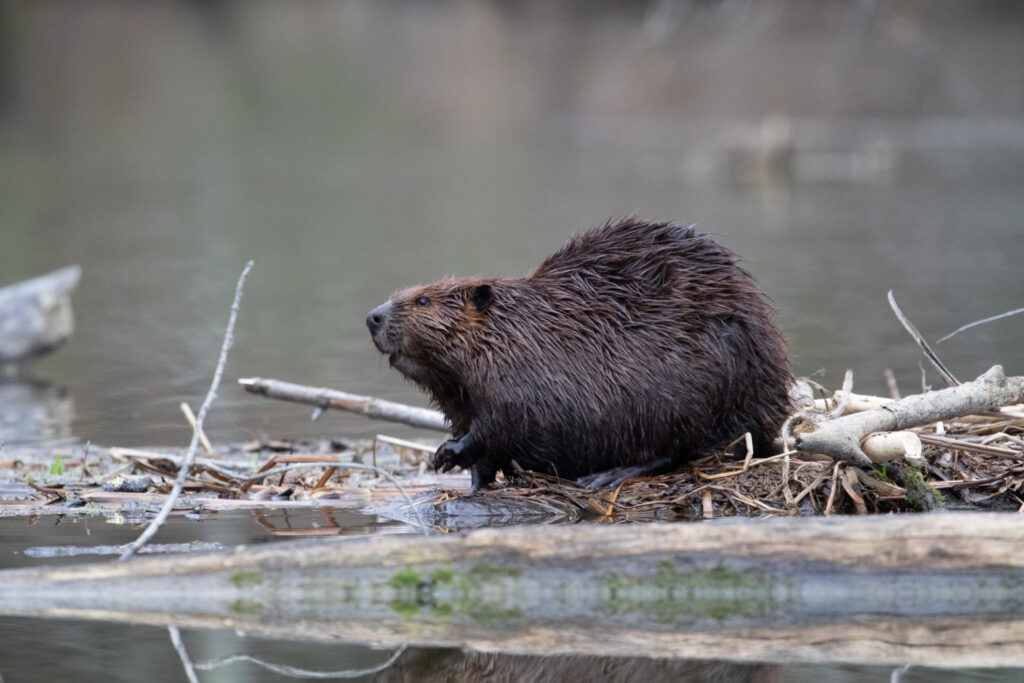 Beavers are ecosystem engineers. Their dams slow down passing river water and create a diversity of water temperature and oxygenation conditions, improving the health of the whole aquatic system. The dams also provide new habitat for fish and invertebrates. Even after the dams break and wash away, rocks piled up against the dam often remain, creating new riffles and features that improve habitat diversity. Beaver dams strain out suspended sediment and some pollutants, making them a natural filter that can improve water quality. They also store water behind them to help reduce flooding downstream.
 If storms are natural, stormwater must be too, right? Not necessarily. Rainfall in a natural setting is absorbed into the soil like water into a sponge. But when rain falls on pavement, rooftops, or compacted ground, it instead rushes quickly to a nearby stream or storm drain. The larger the impervious area, the more stormwater is created. Powerful surges cause erosion, flooding, and infrastructure damage, while picking up all sorts of stuff along the way like fertilizers, road salt, pesticides, dog poop, and vehicle fluids. Major stormwater events can overwhelm city sewers, causing sewage to discharge right into the river! As a result, water quality at river mouths or confluences can be much worse than upstream.
 Many invertebrates rely on small spaces and cracks between rocks in the stream bottom in order to hide from predators, lay eggs, and forage for food. Rocky headwaters offer plenty of this habitat. But farther downstream (like here at the confluence), sediment settling out of the water column can plug up these spaces, destroying this important habitat and the creatures who need it. Sedimentation is a natural process that always occurs to some degree in slow, downstream sections of a watershed. Some aquatic organisms even prefer sandy substrates. But development, agriculture, and stormwater-related erosion can cause massive, unnatural pulses of sediment that quickly bury rich and diverse habitats under sand and silt.
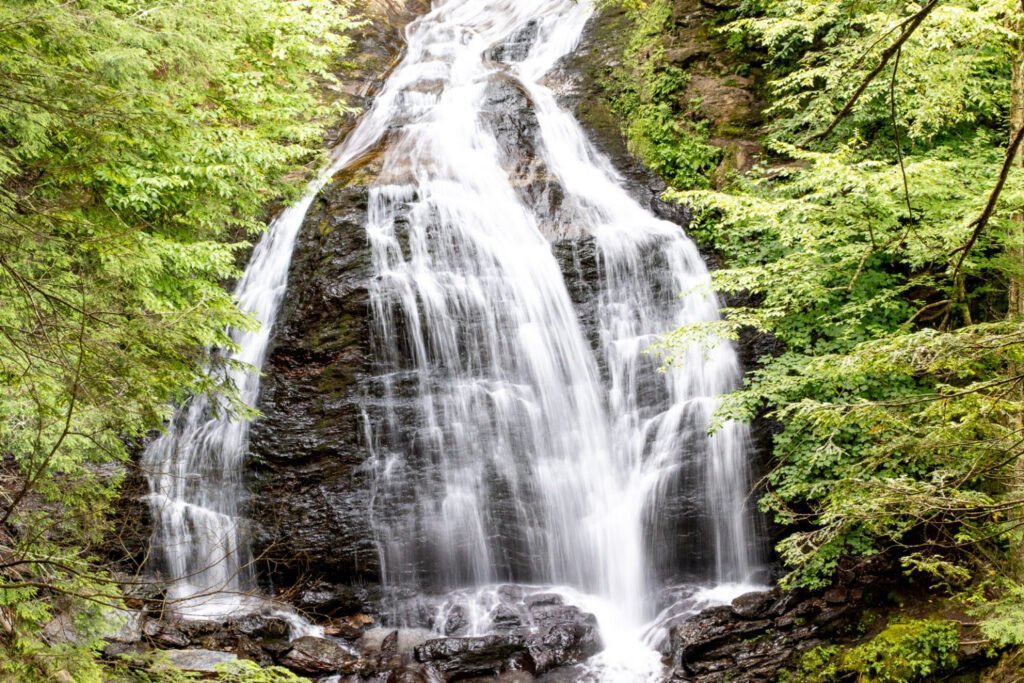 Riffles and waterfalls infuse streams with oxygen — and cold water can hold twice as much oxygen as warm water. The shaded, turbulent waters of healthy headwaters streams are fed by groundwater emanating from cracks in the cool underground bedrock. This cold, shaded, oxygen-rich environment is a fantastic place for aquatic invertebrates, and it supplies the whole downstream watershed with a clean, healthy water source. When headwaters lose their shade due to forest clearing or other development, the resulting rise in water temperature can make the stream uninhabitable to many fish and insects.
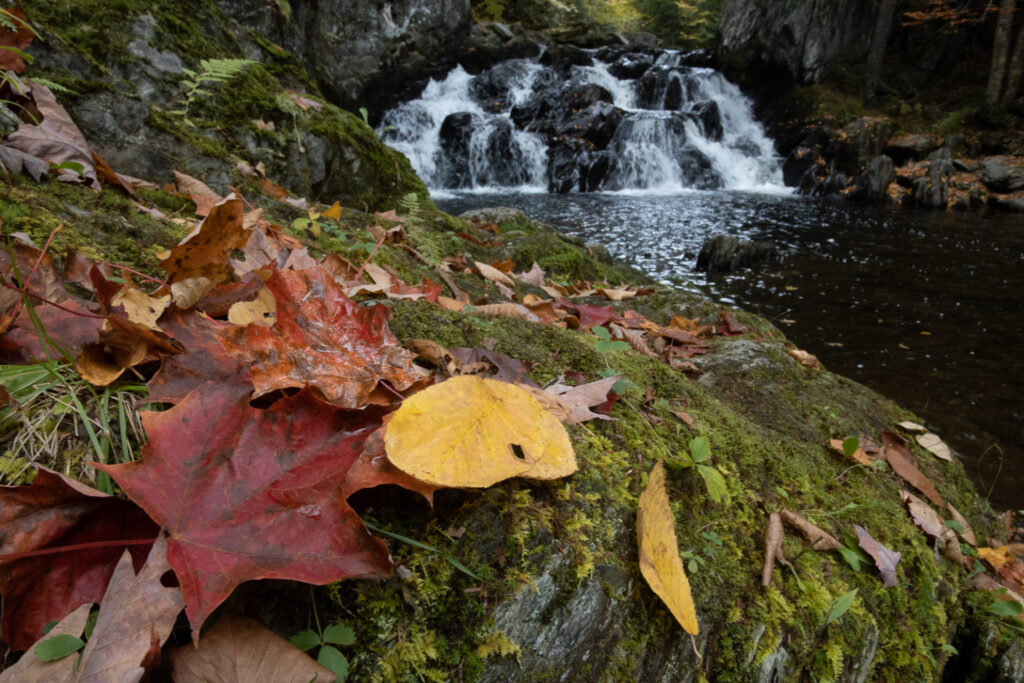 The trees over a healthy headwaters stream provide a buffet for aquatic life. Insects falling from the treetops become food for fish. Leaves fall and decompose, becoming a nitrogen source for the aquatic ecosystem. As fallen leaves stack up against river rocks like pages of a book, they provide shelter for many organisms. And many aquatic insects need to go ashore and climb a tree to finish their life cycle as adults.
 Some rivers hold more diversity underwater than forests hold on land. Every aquatic species prefers different conditions. Some species need slow water, and some need fast water. Some need large cracks between rocks, while some need sandy bottoms. Many fish require submerged boulders and tree trunks to hide and hung among. Some creatures depend on colder water, and others slightly warmer. Some prefer rough water, and others prefer deeper, slow-moving pools. A healthy river system can contain all this habitat diversity in just a short stretch.
 Un-lawn
Mow less often and set the blade higher. Replace areas of lawn with woody plants and perennials. A wilder yard makes for much better stormwater retention and creates habitat for birds and other critters. Aerate compacted soil each year by creating deep holes with a pitchfork.

Pesticides and fertilizers are extremely harmful to aquatic life, and the majority of chemical applications wind up in the waterways. Instead, use chemical-free pest control strategies, and add clover to naturally fertilize the grass in your (smaller) lawn.

Dog poop is unlike that of wild animals, and contains a staggering amount of bacteria and nutrients that greatly impair water quality. Dog waste belongs in the trash, not on the trail or in the woods. For more, check out our piece on The Ecology of Dog Poop.

Install systems to manage stormwater. Use rain barrels to collect water from the roof for use in the garden. Install water bars to divert runoff into vegetation and away from storm drains. Rethink the amount of impervious surface you need in your yard and community.

Storm drains empty directly into the river, so be mindful of what goes in there. Wash cars at the carwash or on permeable ground, not in the street. Keep the drains clear of leaves, grass clippings, and gravel. Don’t dump trash, paint, or other waste down the storm drains.

Encourage dams made by beavers over dams made by people. Beaver dams filter pollution and sediment while creating habitat, whereas concrete dams alter water levels and create barriers for wildlife movement.

Keep forests forested and wetlands wet! These intact ecosystems filter and store rain and snowmelt while regulating temperatures and nutrients. They are also critical to reducing floods and stormwater surges.

A healthy river needs to spill into its floodplain. Advocate against river straightening, channelizing or armoring. Instead, keep new buildings and roads away from the floodplain. As climate change increases storm severity, “room to roam” is the key to avoiding damaging floods downstream.
 Explore the North Branch with this Quest that will bring you to our favorite places along the river. Learn about river ecology, history, and conservation in this family-friendly, rhyming adventure. Hard copies available at the trailhead kiosk and at our indoor aquariums.

The impervious landscape around the North Branch and the Winooski River in downtown Montpelier
The creation of this website was made possible by members of the Montpelier community. This work is a collaboration of Friends of the Winooski River and North Branch Nature Center. This project has been funded wholly or in part by the United States Environmental Protection Agency under assistance agreement (LC00A00604) to NEIWPCC in partnership with the Lake Champlain Basin Program.


And in the quiet I hear the voice of the river passing among the rocks and over stones... perhaps this is where our speech began. Maybe long ago before there were words, there was only the river and the people listened to the water…and the quiet whispering.
— John Francis, Planetwalker