Amphibian Conservation
The NBNC Amphibian Road Crossing Program

The NBNC Amphibian Road Crossing Program
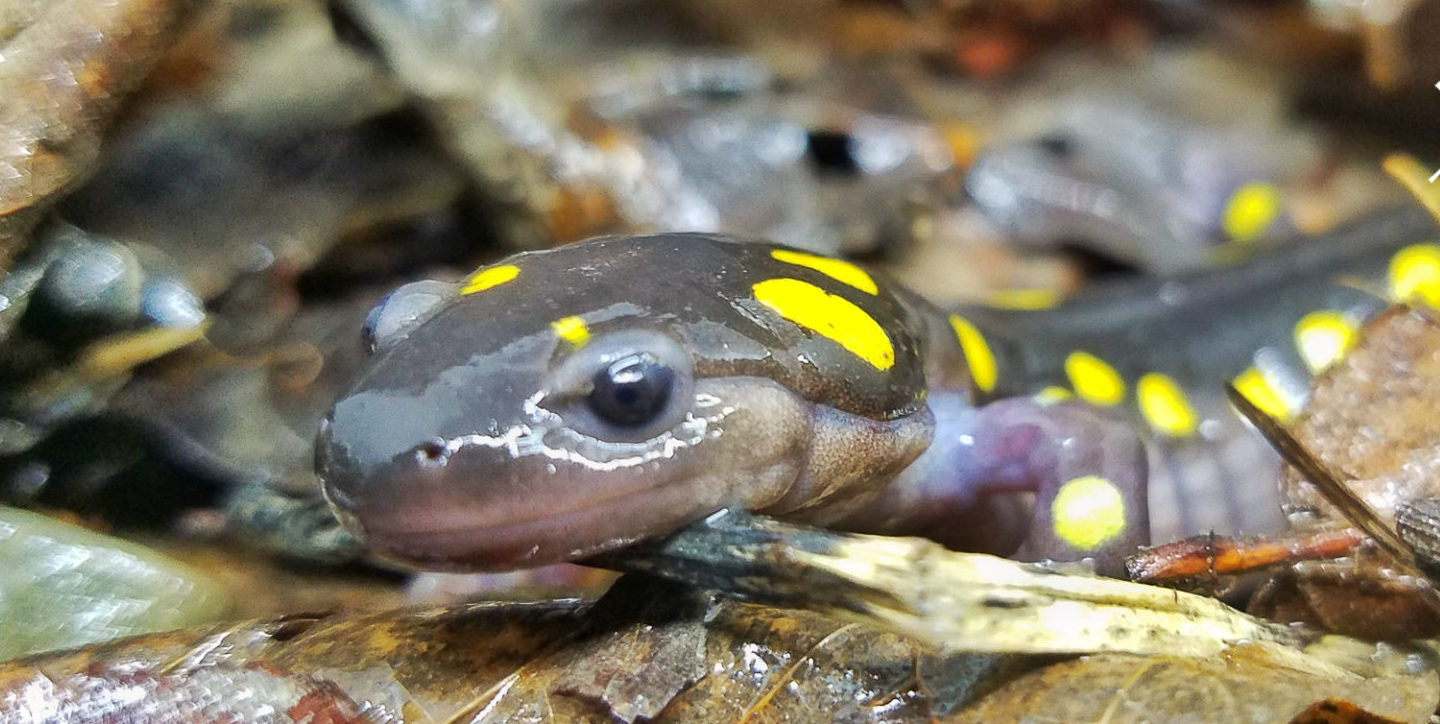
Amphibians migrate from their upland wintering habitats to lowland wetlands to breed every spring. After wintering deep underground or in a frozen state of torpor, amphibians emerge on warm, wet nights in early spring to begin their march to breeding grounds, often crossing our busy roadways at great peril. Since NBNC began monitoring road crossings in 2005, volunteer crossing guards have saved thousands of amphibians while providing important data to conservation science and natural resource planners.
We make small but important changes to the protocols most years. Please be sure to check for an updated manual before you start your surveys each year.
Most of our survey transects are less than 1/2 mile long on quiet dirt roads. Many volunteers consider their ARC surveys a way to exercise in the fresh air while supporting conservation science. That said, please use your best judgement if you choose to participate in this project. It is your responsibility to participate safely.
Our volunteers live at very different elevations and locations around the state, so the best forecast will be one you make on your own. Remember this mantra: amphibians move when it is above 40 degrees, raining, dark, and between March and early May. If those factors aren’t all met, chances of amphibian movement are slim (but not impossible).
Yes! Yes! Yes! This is actually extremely important, as it tells us whether prospective sites are active or inactive, and how many volunteers are participating.
No! Each survey is a one-way transect, so each team should be submitting at least two surveys: one for the way out, and one for the way back. You’re welcome to do as many passes as you’d like, but please do not submit data from multiple surveys on the same form.
Ideally, no. All dead amphibians should be moved off the road so they aren’t counted twice. Any amphibian that isn’t moving itself off the roadway should be moved. This saves them from car tires, and prevents double-counting.
Any amphibian you’re not sure of, you can take a photo and submit it to our Photo Submission Portal on this website. Make a note in the “additional comments” section of the data form.
The data submitted by our volunteers supports the work of our partners at the Vermont Reptile & Amphibian Atlas, the Vermont Agency of Transportation, and the Vermont Center for Ecostudies. Our findings are also made available to city and town planners and conservation commissions to aid in transportation planning at the local level. As ARC grows, we are cultivating conversations with other amphibian conservation organizations to unify methodologies and expand the regional relevance of all local amphibian conservation work.



We feel the beauty of nature… we know that however much in our separate domains we abstract from the unity of Nature, this unity remains.
— Ernest Everett Just (1833 - 1941)