Owl Discoveries
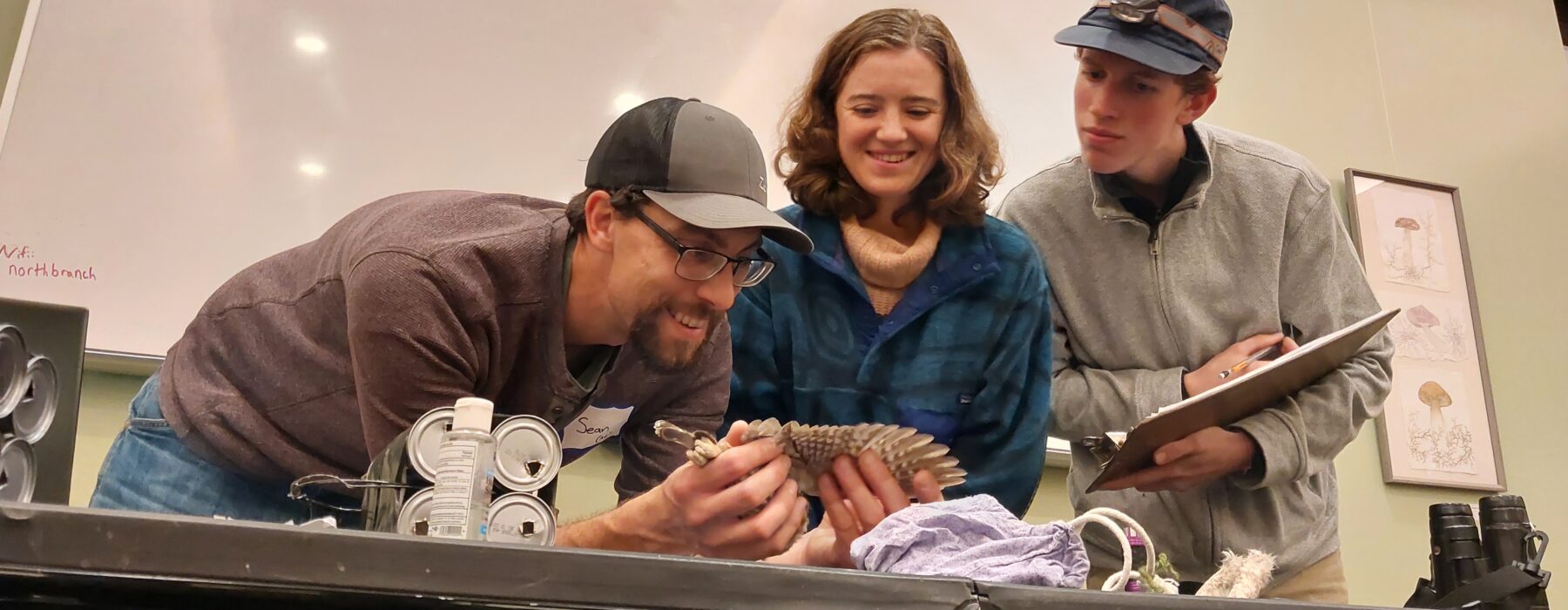
Toot toot toot toot…Every October the hills beyond NBNC echo with the calls of the Northern Saw-whet Owl. From hemlock gorges and river valleys, tiny owls passing by on their migrations take a detour to answer the call and are caught by NBNC’s owl research team. NBNC belongs to a network of scientists around the country called Project OwlNet, which works to understand the life history of the Northern Saw-whet Owl. Our researchers catch the owls in soft mist nets, weigh and measure the owls, record their age and sex, and fit them each with a numbered ankle band.
The wonder of owls is not limited to our scientists — we also invite visitors to watch us band and learn about these adorable owls in person. Visitors get to watch the process from start to finish and then wish our pint-sized predators luck as they continue on their journey.
While we may not know exactly what awaits each individual owl after they leave NBNC, over the course of months, years, and even decades of owl banding we have learned a lot about the lives of Saw-whets. Most of the owls we banded last year were newcomers, and almost half of them were hatch year birds on their first migrations. It is rare that we get to see any of the owls we band again, so imagine our excitement when we captured an owl that we had banded as a hatch year in 2021! This female owl, #1104-21283, is one of just eight banded at NBNC that we have recaptured since 2023. First banded in 2021, owl 1104-21283 is special in another way, too, as one of just a small number of birds to make it past her third migration.
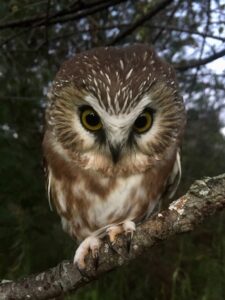 This owl may stand out for her age, but she represents the many, many female owls we capture. In fact, of the 123 owls captured in 2025, 107 were female. Why so many females? Well, current research suggests that females just migrate more than males do! It may be that male owls are less prone to migration because they are defending their territories, but it also has to do with that toot toot toot call we play. We use a male owl call to help draw in owls from all over the valley, and male calls tend to attract female owls.
We also capture owls banded at other research stations, and sometimes the owls we band here at NBNC are recaptured elsewhere — always an exciting message to receive since just 1% of all owls banded are ever recaptured! Often these recaptures happen only days or weeks later during the same migration season, but one of our owls was recaptured two years later in New Hampshire on her fourth migration south — which we only know thanks to carefully recorded data!
Want to be part of this fascinating research? Check our calendar to join an owl banding night or symbolically adopt an owl to support our research! Owl adopters will receive an official adoption certificate with all the details about their owl, plus updates whenever it is encountered again — here or anywhere else.
Visit our Owl Research page to learn more and adopt your owl.