
 To celebrate NBNC’s 30th birthday, we gathered 30 years worth of stories from current and former staff members, program participants, community members, and more. Read on for stories of belonging, adventure, and rogue reptiles! Do you have an NBNC story? Share it with us!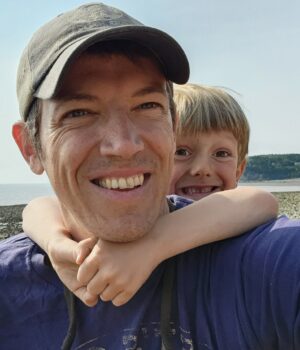
NBNC & Montpelier Parks: A Companion Planting
By Alec Ellsworth (Montpelier Parks Director)
NBNC & Montpelier Parks: A Companion Planting
By Alec Ellsworth (Montpelier Parks Director)
My favorite walk in Montpelier starts downtown at the State House. I warm up climbing the State House Path, then amble through the length of Hubbard Park to North Branch Nature Center. From there, the trail around the field takes me across the bridge and into North Branch River Park, where I can loop up along the hillside, drop down to the pool, and return again to Hubbard Park. I love this walk because it is layered with memories. I hop across rocks by “Salamander Bridge,” aptly named by the NBNC Forest Preschoolers who flip rocks looking for salamanders (the name sticks despite the bridge being removed 5 years ago). I saunter by “Base Camp,” an area of rocks and fallen logs in Hubbard Park just across Elm Street from NBNC, where my 8-year-old built forts during Summer Camp. I wander through “Pine Needle Grove” in the NBNC field where my 5-year old loved to play when he went to Forest Preschool. I take a detour by “Otter Rock,” where I find sun and swimming in the summer. I look over to the “Clay Pits,” a farther flung destination in North Branch Park where Summer Camps venture to dig and discover.
On this walk, I am reminded that the boundaries and differences between NBNC and Montpelier Parks are completely invisible to most of our human visitors, especially the children. Forest Preschoolers don’t pause to consider who owns the “Clay Pits,” “Deer Camp,” or “the Culvert.” These places belong to them in a different way: as sites of exploration, imagination, and belonging. Together, they form a continuous landscape that nurtures connection between people and the natural world. Likewise our animal and plant friends could not care less about the boundaries. The beavers find the birch saplings on both sides of the river equally tasty. The owls find the rodent offerings on either property to be of sufficient delectability. In June, the snow-like cottonwood flurry blankets fields and forests on both sides of the river without regard to deed status or mission statement.
For 30 years NBNC and Montpelier Parks have grown in symbiosis. North Branch River Park came into being in 1995, just a year before NBNC was born. The two organizations complement and support each other, much like companion plantings in our gardens – distinct in purpose, yet stronger together. This partnership enriches our community for human and natural residents, and we look forward to another 30 years of growing side by side.
Close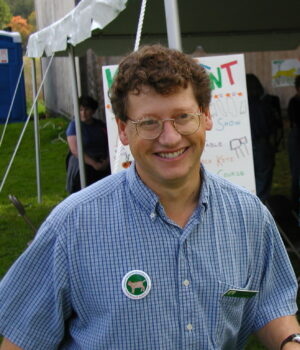
NBNC’s Origin Story
By Chip Darmstadt (NBNC Birding Ambassador & Founding ED)
NBNC’s Origin Story
By Chip Darmstadt (NBNC Birding Ambassador & Founding ED)
For the first ten years of North Branch Nature Center’s existence, starting in 1996, NBNC was a satellite center of the Vermont Institute of Natural Science (VINS). Although NBNC was largely autonomous, we benefited from centralized administrative systems, some sharing of staff, and easy access to raptors for programs. Our grand opening in 1996 featured a live Andean Condor, and even Burlington Mayor Bernie Sanders was in attendance!
However, our annual budget had to be approved by VINS and our growth was slow and incremental. Then in 2006, in order to focus on their new headquarters in Quechee, VINS decided to close both NBNC and their other satellite center in Manchester. Here at NBNC we pivoted quickly, negotiating with VINS to keep the nature center open. It was hard to argue with a $10/year lease agreement! Our local Advisory Council morphed into a board of directors and within a year NBNC was an independent 501(c)3 nonprofit organization.
We were reduced to a staff of one (me!), but soon Sandal Cate joined NBNC as our first AmeriCorps member and then Larry Clarfeld as our second, with both transitioning to staff roles after their service terms. The doors of NBNC remained open, and we offered public programs throughout the transition. Thanks to the hard work of the staff, volunteers, and board — and the amazing support of local donors — we were able to preserve NBNC as a resource for Central Vermont, and help it to fully spread its wings and fly.
Close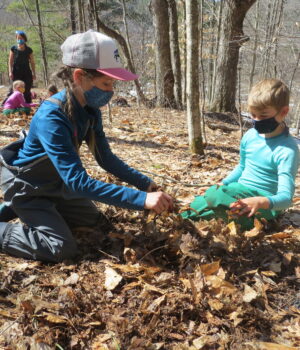
The COVID Pivot
By Amy Butler (NBNC Director of Education, 2009 - 2022)
The COVID Pivot
By Amy Butler (NBNC Director of Education, 2009 - 2022)
It was Friday, March 13, 2020. We’d all been following the news and could see it coming. So that day, just before the shut-down, we had a staff meeting with all this heavy stuff on the agenda about safety, shutting down the building, and how to keep the organization going over the next few weeks. And Chip? Chip shows up to the meeting with a case of Corona beer. It was symbolic of how we as an organization approached things under his leadership. With humor and a ‘we got this’ attitude.
Then it got really serious and we were each isolated in our own worlds. But we stayed connected through technology – Sean was amazing at getting us fluent, and quickly. And everybody stepped up and gave 200% in a time when things were falling apart everywhere.
The creativity that came from that time was phenomenal. We took ECO right into and through COVID – it was seamless, and had such a positive impact on the teachers and children at their homes. Our teaching routines of being in nature provide rhythm and ritual, and we made videos that we shared with our ECO classroom teachers, who were so grateful to share them with their students. For example, we started videotaping ourselves sharing our own Sit Spots – feeling the breeze, watching a group of birds flitting through the branches, or hearing the geese flying north overhead. It was beautiful. At the end we might say, “I wish there was a group of 10 people around me right now, but you can all do this on your own.”
I know this practice helped us as a staff to get through the fear and the desperateness of being alone. And then, when things were opening back up, and schools everywhere were making plans to spend more time outside, our teachers were already prepared. Our students knew how to do this. We had outdoor classrooms and routines, and we already knew how to learn outside.
I remember Carrie saying: “If I hear the word pivot one more time… I’m going to pivot you right out the window!” For Carrie, creating those videos was such a growth edge for her, but once she pushed through that – because it was that or nothing, right? – she did such great work. And her song and storytelling videos were the most requested ones afterwards. People still love them.
Close
A Place of Belonging
By Kate Taylor (Friend of NBNC)
A Place of Belonging
By Kate Taylor (Friend of NBNC)
On a trip to Canyon country with NBNC a few years ago, my partner Char experienced debilitating hip pain. Rather than complaining that she would slow us down the group jumped in to help out. Sean, our trip-leader, managed to acquire a wheelchair and everyone pitched in to help push her around. One day in Bryce Canyon, Char wanted to go up a steep hill to a lookout. Since I had already dumped her once (there’s another story, with a learning curve about pulling a wheelchair on rough terrain, rather than pushing it) I was nervous, so everyone helped and we dragged her safely up. Then we had to get her back down again without losing the chair (and Char!) over the edge.
It ended up being a highlight of my trip. Char and I could have felt sidelined or that we were holding others back – instead everyone made us feel welcome and that the challenge was just what they wanted.
Another time, I was walking around Sodom Pond in Adamant when I saw an Eastern Pine Elfin, a tiny butterfly which looks brown from a distance, but up close shows a range of colors from red and gray to black and chocolate. I was soon on my belly taking photos. Out of the corner of my eye I saw a couple of people walking toward me. I felt a bit awkward, but wanted to get my photos, so I remained where I was. I was about to get up when someone said. “Oh, it’s Kate. What do you see?” I looked up and it was Sean. We chatted about butterflies for a while then wandered our various ways and it never occurred to me to be embarrassed that he had caught me on my belly in the middle of the road taking a photo of an insect.
Close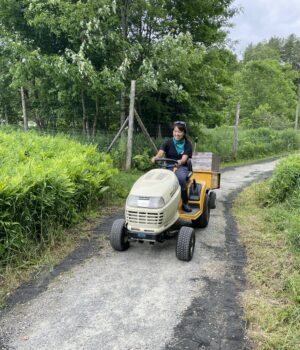
Earth Day Tree-Planting
By Lia Ivanick (Former NBNC AmeriCorps Conservation Technician)
Earth Day Tree-Planting
By Lia Ivanick (Former NBNC AmeriCorps Conservation Technician)
Only two weeks into my term as AmeriCorps Conservation Technician at NBNC, my mom and sister were visiting me for the weekend and joined the Earth Day tree-planting event. Neither of them had done a lot of outdoor volunteering before, but they helped hype me up for the day when I was nervous about hosting my first NBNC event, and then joined 25 other people from the community to plant more than 100 trees in the rain!
Despite the weather not being ideal, a lot of enthusiastic people showed up and it turned into a really fun day of bonding in the mud and meeting friendly community members. I was so new I was still learning the names of all the staff, but I felt supported and encouraged working with my new coworkers Em and Annie. Everybody was mingling and having fun doing something good for the land, and my mom and sister had a blast.
To my surprise, a lot of my new AmeriCorps housemates showed up to help plant, too! We had just met each other at that point, but they came out to support me and told me at the end that they had a really fun time. Some of them even continued to come to other volunteer days at NBNC after that.
All in all, it was a wonderful start to my AmeriCorps term, and a really lovely day for community stewardship. During my term at NBNC, over many more days of community stewardship work, I realized how important it is to have hyper-local networks for conservation and connection as we live through these frightening and isolating times. It’s important that we can see each other face to face and cultivate an ongoing relationship with land that we can touch, so we have a chance to turn away from our current path of destruction and instead turn our energy towards nourishing life. NBNC provided that opportunity for me.
Close
My Friend Mert the Turtle
By Emily Sloan (NBNC Office Manager since 2008)
My Friend Mert the Turtle
By Emily Sloan (NBNC Office Manager since 2008)
Back in 2009 or so, NBNC had a full house in the Critter Room. There was Sheela the Ball Python, Mert the Wood Turtle, two Box Turtles, a Painted Turtle, a Tiger Salamander, two Spotted Salamanders, an Albino King Snake, Rosie the Rose Tarantula, and even a few Madagascar Hissing Cockroaches.
Of all of them, Mert was the most intriguing, charming, and challenging of the bunch. It would begin with changing his water tub, something neither of us liked because it involved sticking my arm into his home and extracting the tub. I had to move him from the tub or that side of his home and quickly pick up the tub without spilling the water, all while attempting to keep him from attacking my arm — quick, smooth, and steady was the goal! Once that was complete (including cleaning the tub, stones, and the sides of his plexiglass enclosure that he adored trying to climb), I would commence with feeding.
Now arrived the most exciting entertainment of the day! Mert’s plate of food consisted of a worm — just one, live and wiggling — along with diced sweet potato, tomato, and lettuce. A lovely palette of color combinations! After assembling the plate came the biggest challenge — putting the food plate down on the floor of the Critter Room, picking up Mert, placing him on the floor of the room, and running out the door. As I was shutting the door behind me Mert would scamper, quite rapidly for a turtle, towards me, as if to say, “Hey, watch out, I’m coming for your toes!” It was an adventure every time – and if I paused, it was all over.
Eventually Mert would eat his meal and continue to explore the room and wait for my return. I would usually find him tucked into a corner or trying to escape behind another critter’s home. I would then scoop him up and carefully place him back in his home, add the clean tub and stones, and refill with fresh water once again. At that point he would clumsily climb up over the tub and plunge himself into the water — safe and back at home. This story played out over and over again — never a dull moment with our friend Mert!
What happened to the critters? When we made plans to renovate the farmhouse, create more office space for employee expansion, and add the new addition we had to make the sad decision to re-home our critter friends. All were successfully adopted by other organizations, except for Sheela the Ball Python who belonged to a longtime employee, Larry Clarfeld. Mert went to the Southern Vermont Natural History Museum, where he continues to thrive, entertain visitors, and keep staff on their toes!
Close
My Heart & Second Home
By Linda Garrett (NBNC Director of Education, 1996 - 2004)
My Heart & Second Home
By Linda Garrett (NBNC Director of Education, 1996 - 2004)
When VINS first launched North Branch in 1996, I served as the Education Director. One of my favorite memories at NBNC was at the very beginning. Chip and I spent quite a few hours literally scraping the dried sheep manure from the floors of the barn. As we worked, we did our best to somehow imagine an adequate indoor meeting space. To contrast that scene with the vibrant, expanded, and clean (!) campus that is now NBNC is a testament to the talents and dedication of so many people.
As a staff member, NBNC was my heart and second home for eight years. I felt extremely fortunate to work alongside such talented, knowledgeable, and dedicated people. The program participants were equally delightful and impressive, from the 3-year-olds in the preschool programs to the adults in various trips and courses. The work was demanding, but always creative and inspiring, too. Honestly, when I left to become an elementary school teacher (I wanted more extended and deeper relationships with my students), there were days when I asked myself, “Why did I give all that up?!” Beyond my own experience, both of our children spent some very wonderful and meaningful summers as campers at NBNC. Their future passions and careers were shaped, in part, by their time at NBNC.
What are my three words for NBNC? Vibrant, joyous, and important. It’s important that NBNC be here for the next 30 years to awaken people’s senses, awareness, responsibility, and love for the natural world.
Close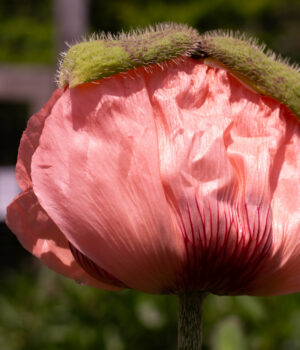
Have You Ever Seen a Poppy Pop?
By Jessie Taylor (Former NBNC Employee)
Have You Ever Seen a Poppy Pop?
By Jessie Taylor (Former NBNC Employee)
I have so many fond memories of my time working at NBNC when it was young. One was from around the year 2000: a group of us were sitting outside having lunch. I think it was most of the staff at the time, which was Chip Darmstadt, Susan Sawyer, Linda Garrett, and me. It was mid-spring and we were looking at the garden, and commenting that the poppies were just about ready to go – and then one did.
Have you ever seen a poppy pop? They explode open. It’s the only time I’ve seen it happen, and it was just when we were talking about it.
Close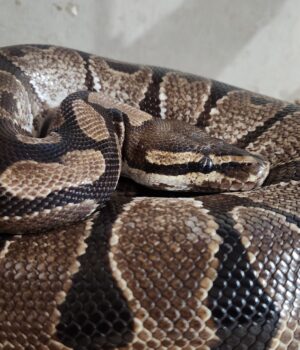
The Critter Room
By Chip Darmstadt (NBNC Birding Ambassador & Founding ED)
The Critter Room
By Chip Darmstadt (NBNC Birding Ambassador & Founding ED)
In the early days of North Branch Nature Center, when NBNC was still a part of VINS and long before our renovation, the “Critter Room” was a popular attraction for families with young children. First-time visitors often felt they were entering someone’s private house as they walked through the front door of the 1830s farmhouse.
The “critters” were an eclectic assemblage, some native Vermont species, but many not. There was Mert the Wood Turtle who would attack your foot whenever he had free range of the Critter Room during his lunch hour. Two very shy Three-toed Box Turtles spent most of their time buried in saw dust, but were always willing to demonstrate their ability to hide inside their shell. Some of our brave young visitors were a bit squeamish when touching a live Madagascar hissing cockroach, donated by former State Entomologist, Trish Hanson. The cast of characters evolved over time: Painted Turtles and Pumpkinseeds, a Wood Frog or an American Toad raised from eggs by naturalist Susan Sawyer, Rosie the Rose Tarantula, and even the occasional exotic spider or tree frog found in the produce shipments and donated by Hunger Mountain Co-op.
However, Sheela the Ball Python was our most notorious resident. A pet of staff member Larry Clarfeld, Sheela had a propensity for escaping her enclosure whenever possible. Once her disappearance coincided with a rash of paper jams in the photocopier. We soon found her wedged in one of the paper trays, enjoying the copier’s heat!
Another search-and-rescue mission required the services of the entire Montpelier High School cross country team. During one of their regular practices at NBNC, we recruited them to scour the building for Sheela. She was discovered behind the fridge, coiled up against the condensing unit. Thank you, Solons!
What happened to the residents of the Critter Room? Some lived out their full natural lives, while others, like Mert, found new homes at other nature centers. And Sheela, the escape artist, was happily reunited with her owner!
Close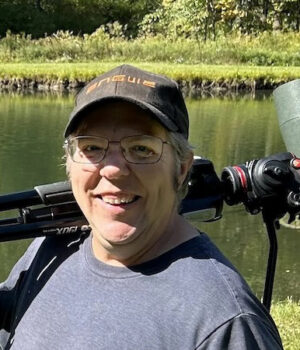
My Favorite Local Backyard
By Nick Parker (Former NBNC Employee)
My Favorite Local Backyard
By Nick Parker (Former NBNC Employee)
In the summer of 1999, I was a burned-out former reporter, looking for work back in my hometown of Montpelier. Even though I was told I was overqualified, I was desperate to get a change of scenery both literally and figuratively, and took a job at NBNC.
I went on my first ever woodcock walk at NBNC and was a little too amused by the “peent” of the woodcock. The day before April Fool’s, I snuck into Chip’s office and put up over 100 little yellow Post-its with the word “PEENT” on them all over his office. I’m pretty sure he was still finding some “peents” by the time he retired!
For another April Fool’s joke, I sent out a staff email (which included all of VINS, eep!) that we had all been invited to do a NBNC staff retreat in a redwood with Julia Butterfly Hill. The email was a little too convincing and had several people quite miffed that it wasn’t actually happening!
I loved seeing my first Northern Mockingbird in the tree next to the barn and staff lunches out by the butterfly garden. I still visit often and am working with Luis to create a BirdAbility co-sponsored event this fall at NBNC to promote accessibility in birding and increase access to the natural world. NBNC is one of my favorite places to be in all seasons, especially with other enthusiastic birders and anyone who loves a peaceful spot in nature.
I don’t have my own backyard, so I’ve always felt like NBNC is one of my many local and favorite backyards. I’m always finding something new and amazing. I also am extremely grateful to see NBNC’s inclusivity being unapologetic and proud, from the Black Lives Matter flag to the pride flags. It’s one of those places that is a home away from home for anyone who needs one.
Close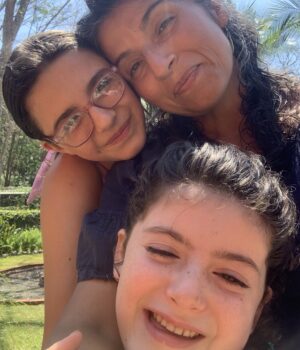
Feeling at Home
By Melisa Oliva (Friend of NBNC)
Feeling at Home
By Melisa Oliva (Friend of NBNC)
Both of my daughters are alumni of Forest Preschool at NBNC, and I am a neighbor who loves to see NBNC thriving. My daughters walk the land, know the names of trees, know individual trees, and often walk to visit them. They feel at home at NBNC.
Forest Preschool at NBNC gave our daughters world- class early childhood education focused on their relationship with the land, nature, and animals. I am sure that my daughters’ educational journeys have been significantly impacted by the resources and the special type of contact that they had with nature at NBNC. Thanks to NBNC, so many kids from diverse communities and backgrounds can have a close relationship with nature, and can feel, when they are outdoors, as if they are at home.
Close
Miss Lindsay Vandal’s First Day
By Amy Butler (NBNC Director of Education, 2009 - 2022)
Miss Lindsay Vandal’s First Day
By Amy Butler (NBNC Director of Education, 2009 - 2022)
This story involves Lindsay Vandal. It was her very first day as the Forest Preschool Director. I get to work 20 minutes early, and – I tended to really veer away from the Critter Room, I wasn’t too into the critters at all – but for some reason, that morning, I pop my head in there. And I look around, and I stop at Sheela, the Ball Python’s case, and then I went over and looked at the turtle, and then as I’m swiveling my head, I’m like: Oh, no. And I look back, and Sheela’s not in there.
And I thought, Miss Lindsey Vandal is starting today. Miss Lindsay Vandal has her Master’s degree in Education from Middlebury College. My girl’s got class. I recruited her – like hard, I pulled her away from a job in Burlington at a private school. What is she going to think of this place?
So she comes in, and we’re sitting in the dining room with the striped wallpaper, and the piles of plants and everything that was crammed in there, and we start small talking and I look her in the eyes and say “I’m so excited you’re here, Lindsay. And I have to be really honest with you. I have to tell you something about today, about working here in this building.” And I can see her starting to tense up. “We have a Ball Python, Sheela. And she got out. She’s somewhere in the building. She tends to like to be near the printer, because it’s warm,” I say as I point to the printer, two feet behind Lindsay’s chair.
I watch as Lindsay tightens up, and I wonder if she’s going to scream, or head right back out the door. She pushes her chair back and stands up. She gives the printer a long look, and chooses a new seat at the far end of the room.
Close
NBNC Has Been My Refuge
By Patricia Fontaine (Friend of NBNC)
NBNC Has Been My Refuge
By Patricia Fontaine (Friend of NBNC)
I first discovered NBNC through Chip Darmstadt by way of Bryan Pfeiffer, when I had the great good fortune to go on a birding adventure with these two. I was prepared for their expertise, as I had been studying all things birding with Bryan for years. But I was unprepared for how much we laughed, and how much I enjoyed not only birds, but the wide-ranging conversations we had about bugs, ecology, gas-station burritos, and world events.
More trips with Chip ensued, and on one particular trip to Magee Marsh, I volunteered to take over organizing food options for the group. I rode shotgun in the rented van, and Chip and I had many conversations about NBNC’s future, including how to increase inclusivity and equity at NBNC. I appreciate the opportunity to be one of the many thought partners in this endeavor.
Another significant way NBNC has touched my life is as a refuge. Although I live in northwestern Vermont, many friendships were created in Montpelier – my second family. Over the years, when several of these dear friends came near the end of life, I moved part-time to Montpelier to help tend their days. Almost every morning, and sometimes again in a moment of afternoon quiet, the path to the North Branch became meditation and nourishment. The birds calling through the trees, the burble of the river – especially at the river bend, on the bench beneath the bent apple tree – refreshed my tender heart, and filled it again to pour into our circle of care. I could walk that trail with closed eyes, and sometimes did, listening for Chickadees, for the Hermit Thrush, for the White-throated Sparrow, singing along with the steady, silvery flow of the river.
Close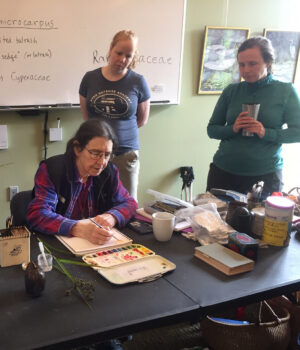
I'm Forever Grateful
By Susan Sawyer (NBNC Educator, 1996 - 2006)
I'm Forever Grateful
By Susan Sawyer (NBNC Educator, 1996 - 2006)
Back when NBNC first opened, I had been a trainer for VINS in the ELF (Environmental Learning for the Future) program, part-time and working from home. I had three teenagers and was also teaching at Vermont College in the Adult Degree Program part-time, but I really needed a full time job. Tim Traver took me on — a percentage of my time was for North Branch but most of it was for statewide education programs, writing curriculum, teaching it, and illustrating. I had never worked in an office before — I’d done many other kinds of work, but I was really not prepared for the complexity of life in an office. Sometimes I wasn’t great at it. I don’t know how Chip put up with me. I was a klutz sometimes, and once broke a toilet by dumping Mert’s water into it but letting a rock fall into it too. Ever seen that happen, a broken toilet bowl? Turns into a fountain.
I really loved the North Branch and its people. A favorite part of my job was the butterfly garden, located where the addition is now. It had all-new beautiful topsoil, donated by Cameron O’Connor, and I got to plant it with riotously colorful patches of perennial and annual flowers that were selected purely for their attractiveness to butterflies or usefulness as host plants. It worked — they came. And I loved eating lunch with my colleagues out in the butterfly garden we planted, at the table Bryan Pfeiffer donated. Books, binoculars and nets ready – and in the fall, stickers to put on the migrating Monarchs. It was fun to watch each released Monarch — they never went back to nectar, but flew straight up over the house and south down Elm Street.
Osa Busch, a homeschooler from Calais whom I knew from the ELF program, came every Tuesday for years and helped out.
Being in charge of summer camp that first summer was hard work — but the days we just spent wading in the river doing stream studies, using the kick net and dishpans, catching and watching invertebrates and picnicking on the river bank — those were the best.
Once, I was down by the river and watched a mink with a fish in her mouth running along the edge of the water and then popping into a big woodchuck hole — while a woodchuck was sitting outside the other entrance about 20 feet up the bank. What kind of roommates were they? Did the mink have her young ones stashed somewhere by the woodchuck’s back door?
I worked late a lot, writing or drawing after everyone else had gone home. In June, just about when school was getting out, the field would be so full of blinking fireflies it would make a sane and sober person dizzy and disoriented. I was working late doing the illustrations for Hands-On Nature. It was funny being up on the second floor and listening to some jolly (tipsy?) teens wanting to swim but not be caught, trying to cross the field through all that visual craziness. Lots of giggling.
I loved being by a river. I hadn’t lived by running water since high school by the Mississippi in Iowa. Once I went out with Fred Larsen, eminent and kindly surficial geologist from Norwich University, with shovel and post hole digger, finding river gravel up near the barn — where the North Branch might have run five hundred years earlier. Visiting and watching that river (and reading about river morphology and behavior), and observing the vegetation and wildlife in and along it, was wonderful.
Once in early spring as I was locking the front door at about 5:30, I looked up and saw something I’ll never forget. It had started to warm up and the first birds had started returning, but then we got a hard freeze and some more snow that lasted several days. There was a poor dead robin, frozen stiff, in the gutter by our mailbox. A crow came sailing up Elm Street, just a few feet off the ground. He swooped down and picked up the robin carcass. But he had a raven right on his tail, who dove at him and made him swerve and open his mouth to protest — dropping the robin, which the raven snatched up and carried sticking straight out of his beak like a cigar — mad crow right behind him — and they all took a sharp left to the stump dump and were gone. It was a few seconds but I’m still laughing.
In the years I worked at North Branch and for the ELF program and the middle school Environmental Citizen program, I got interested in many natural history subjects because I needed to teach them. We hosted many great speakers and workshop and field trip leaders, and taught ourselves and each other, and I also had the chance to start learning sedges and mosses from Jerry Jenkins, and go to Eagle Hill and the Morton Arboretum to study scientific illustration. The Nature Center and the people I met because I worked there let me get an education I’m forever grateful for. I hope I gave as much as I received.
Close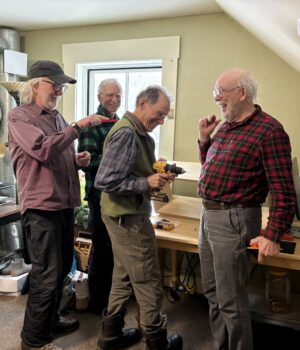
FACCing It
By Rick Paradis (NBNC Board Member & Volunteer)
FACCing It
By Rick Paradis (NBNC Board Member & Volunteer)
I’ve taken on the dubious task of coordinating a volunteer group here at the Nature Center called the FACCers (Facilities and Custodial Committee, pronounced “Fakers”). We consist of mostly retired “professionals” who live in the area and try to tolerate each others’ company for at least a few hours at a stretch. We meet about once a week to perform assorted tasks such as painting (the sides of barns, not fine art), building outdoor furniture and indoor shelves and preschool cubbies, chasing dirt from the basement floor and assorted windows, and dislodging the odd artifacts from clogged toilets.
Coordinating this auspicious group is not for the faint of heart. With retirement and age come little tolerance for control and keeping on point. Imagine, if you will, trying to herd a group of cats through a carwash. Also at this stage of life comes strong opinions and scant social filters or restraints to keeping those opinions to oneself. Between short bursts of actual useful work we often engage in long diatribes on the world’s assorted ills, the latest personal health challenges that seems to dog us all, and lengthy and near-violent arguments about the best way to move a manure pile or fetch a simple tool from the garden shed. And our “coffee breaks” are legendary both in how long they last and the sheer assortment of pastries and other edibles consumed. The one point that I believe we can all agree on is our sincere love and commitment to the Nature Center and our strong desire to see it succeed in achieving its mission of connecting us all to the natural world.
Close
A Community Anchor
By Autumn Bissonette (Friend of NBNC)
A Community Anchor
By Autumn Bissonette (Friend of NBNC)
The first Thanksgiving my husband and I intentionally spent alone, we walked the trails around North Branch Nature Center. After a meal of salmon and vegetables, we savored the slow pace and warm day of a meandering walk. The following year I walked the same trails with my newborn son and my mom who was visiting from the west coast. It was a hot August that year and the walk along the river was refreshing. Several years later, I attended the nature playgroup with my toddler son — and his infant sister in tow. It was a great way to meet other people with young children and Sandal Cate was a wonderful facilitator. My daughter ended up attending Forest Preschool — a much needed bridge between playgroups and another outdoor school program for slightly older children that was offered at the time. She explored, created, and enjoyed being outside the whole time. Over the years, my children and I often slipped in to observe the inhabitants of the critter room. Years later, I continue to meet friends at NBNC to ski, walk, or take a dip in the river. When I wanted to bring the But Why podcast to Central Vermont, I reached out to partner with NBNC. It was a successful collaboration between NBNC and the Kellogg-Hubbard Library. When I raised monarchs at the library and wanted a place to tag and release them, I was able to release the first few with the wonderful teachers and students at Forest Preschool. My time in Central Vermont for the past 20-plus years has been anchored by North Branch Nature Center and the variety of offerings available to the community there.
Close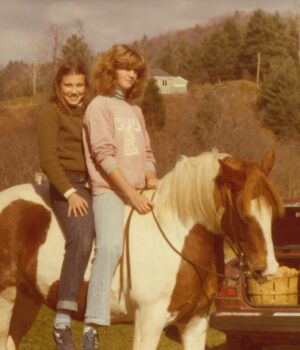
Our Family's Time on the Farm
By Pat Brown (who lived and farmed here from 1974 - 1996)
Our Family's Time on the Farm
By Pat Brown (who lived and farmed here from 1974 - 1996)
In 1974 our family was returning from a two-and-a-half-year stay in Australia where my husband Ike and I had been teaching. Our children — Laurie (7), Jeffrey (6), and Christopher (5) — were excited to be back at our summer camp on Newark Pond and near their grandparents. Ike was hired to teach science at Harwood, so we began looking for housing in Montpelier, my home town. A realtor was showing us a house in Wrightsville and on the way back to town we noticed a “farm” property for sale that looked interesting, and I knew the owners. We called them, went to look at it, and bought it. As I recall it was approximately 30 acres for $30,000. We moved in at the end of September.
All the fields had been neglected and small trees were beginning to grow. One day a farmer from Wrightsville stopped by and said he’d plow up fields if he could plant corn. We agreed to let him, and James Laplante became a friend.
Because we had been in Sheep Country in Australia, we thought we’d try it. We purchased a ewe with twin lambs, and threw up a couple strands of barbed wire fencing, very proud of ourselves. Ooops! The sheep are out! So they were kept in the barn for a few days, waiting for an order of woven fencing.
Our daughter had been teasing for a horse. We located one in the Northeast Kingdom, bought him, and made a stall in the large barn which was our garage. Time went on and we added more sheep, chickens, and pigs.
In 1980, we cut Hemlock trees off my grandfather’s farm property on Gallison Hill, and hired a portable sawmill company to cut it into lumber. From a design drawn up by Ike, a group of Harwood teachers under the direction of one of the industrial arts teachers built the first floor of a new barn. There was a large area for sheep, two horse stalls, an area for chickens, and a grain room. The top was floored over and we used a tarp through the first winter. The following year we added the large hay storage area and a metal roof.
We had a small raspberry patch, and added strawberries and a large garden. We had milk delivered to the house, joined the Plainfield Coop, and froze vegetables and meat in two large chest freezers. I made bread and doughnuts every Saturday. During the week there were desserts made for the family and to share with neighbors.
Our sheep population grew so we hired a shearer and transported our wool to Bartlett, Maine and exchanged it for yarn. Ike bought me a spinning wheel and I learned to spin. I knit sweaters, hats and mittens for the family. My mother had taught me to knit when I was in 6th grade.
After doing some substituting at Union School, I returned to full-time. The school had the Montpelier Elementary Environmental Program (MEEP) with three teachers. They asked for permission to use our property and they started coming often for their classes.
Once I was teaching full time there were times when the police would call the school to notify me, and I’d go during lunch to get animals back behind fences. I recall one time, someone knocking on my classroom door, and opening it to find a school board member there, telling me he’d just gone by my house and some of the sheep were out. I thanked him, but what I wanted to say was, “so why didn’t you stop and put them back in?” Whether it was the sheep or the pigs or the two beef cows down munching grass at the rec field — someone in the family had to shepherd them back. It is amazing what a little grain rattled in a pail can do!
We have fond memories of our time on Elm Street. It couldn’t have been a better place for our family to live — so close to the rec field where the boys played baseball and football, and being able to walk or bike to the swimming pool. With our large garden the kids were required to weed one row of vegetables before heading to the pool. We didn’t believe in giving the children allowances, so the boys made money selling worms to local fishermen. It was surprisingly successful.
Memories that stand out:
We raised “meat” birds that we butchered just before school started in September. It brought the neighborhood kids to watch the reality of “a chicken with its head cut off,” a biology lesson as Ike cut up the carcass after the kids had plucked the feathers. I cleaned the parts and froze them. But it was a couple weeks before we had chicken for a meal.
Flooding one of the fields and letting it freeze so that the neighborhood kids and friends could ice skate.
Cross country skiing around the property.
Ike and the boys taking the tractor and trailer up to the town construction dump across the road from us and bringing home odds and ends to build with. The boys built a cubbie house in one of the sheep pastures. But they discovered the sheep would use it to get out of the rain or hot sun, so they added a second story for themselves.
We were never quite organized enough or aware when our ewes “went into heat,” so the birth of some lambs was a surprise. During the later winter months I would set an alarm for about 2 am, get up, and go out to check on a ewe I suspected was going to lamb. I would get in the pen with the ewe and lamb to make sure the lamb got the first taste of milk. A few times I found myself slammed against the wall by an angry mother. Once in great while a young ewe would reject the lamb and I became the lamb’s mother, feeding it a bottle. As the weather got better I could go to the kitchen door, call the lamb, and it would come running. I’d feed it in the kitchen and when done, open the door and it would leave and head back to the pasture.
But when dealing with animals there are always sad memories, too. We bought two cows to raise for meat and one was pregnant. Soon we had a beautiful young bull which our daughter fell in love with. She even reached the point when she could get on his back and ride him around in the pasture. We didn’t have barn space for him for the winter so we sold him. Two men came with a truck to pick him up. Our daughter was standing at the dining room window watching with lots of tears. The men led him up to the truck but he refused to be loaded. After several tries, Ike came in and asked Laurie to help. She went out, took the rope, talked gently to the bull, and walked him up into the truck.
Our last vegetable garden was where the parking area of the Nature Center is now. It was large enough so that we invited two Montpelier retired teachers to use some of the space. Thelma Oakes (my 5th grade teacher) and Ruth Daman were happy to join us and were terrific gardeners. Yes, in the early 1980s, a community garden long before anyone came up with the idea!
Our three went off to college and then very soon were graduating and starting their careers. Ike and I were getting ready to retire so the For Sale sign went up. We did not hire a realtor. At least one party wanted the property to raise horses and have a riding school, but couldn’t come up with the money. The mother of one of my former students approached us to say that the Nature Conservancy was looking for a property in or near Montpelier for VINS. They agreed on our price.
We had always wanted to return to Australia to visit friends and see parts of the country we hadn’t seen. So, leaving our daughter and a lawyer friend to complete the sale, we left on our dream retirement vacation.
It had been 20 years living on the property. As I look back, we worked incredibly hard but the land gave back to us so much, and I hope we were good caretakers of it.
Close