
2026 Educator Institute


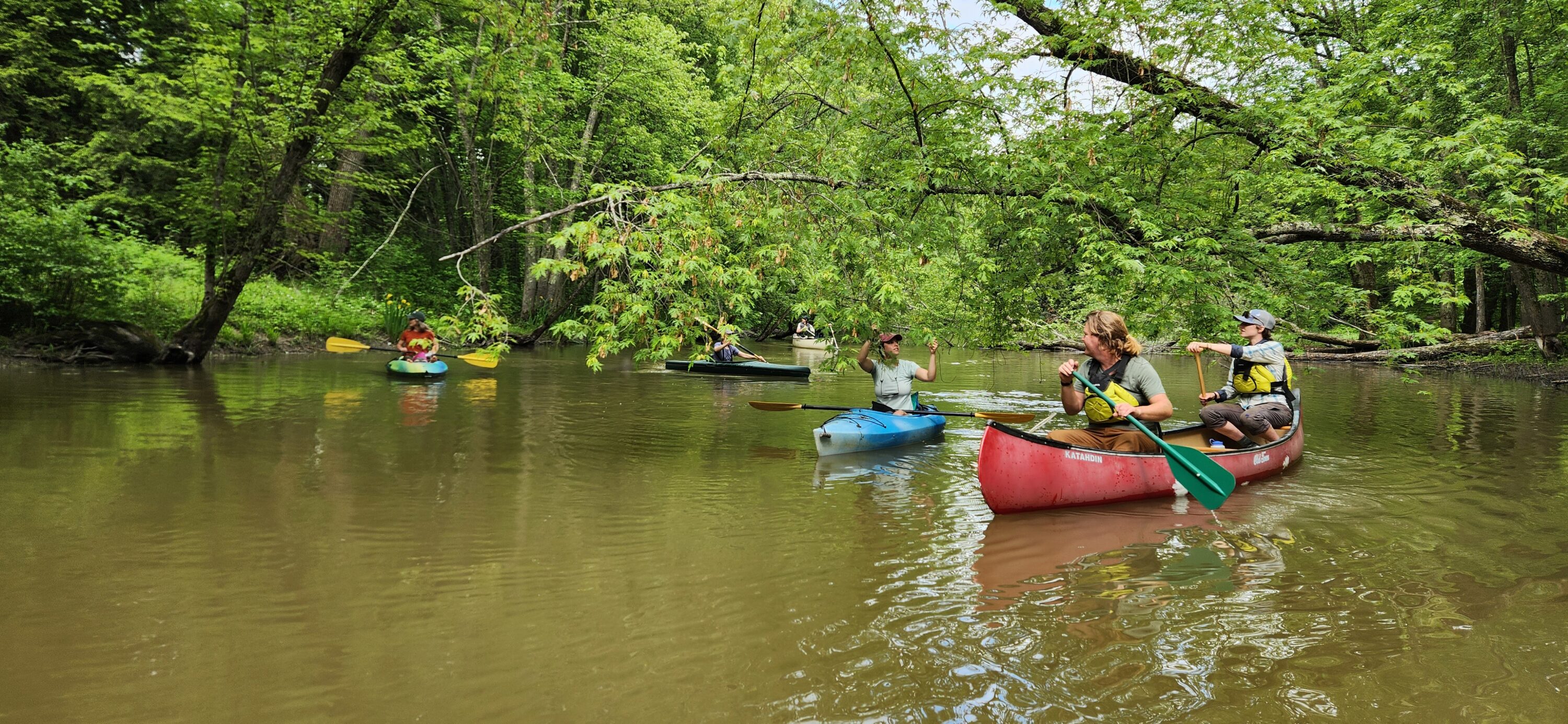

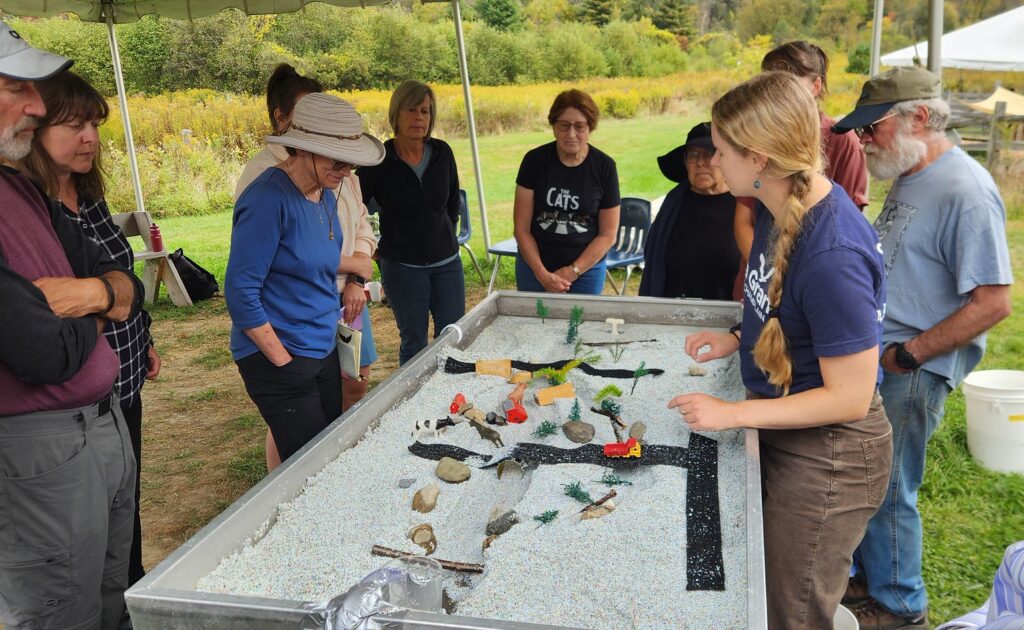
A week of great fun and learning in the river! This week-long exploration of Winooski Watershed starts in the verdant headwaters of the Winooski River in the Green Mountains, and works its way downstream, unpacking fundamental concepts in river science along the way. We’ll visit the old forests way up the Winooski’s North Branch to see where forest ecology and river health intersect. We’ll head downstream to meet a family of resident beavers to see how this species historically defined the flow of water across the Northeast. We’ll visit a brook catastrophically altered in 2023 to witness how streams are adjusting to our ever-increasing extreme rain events. And we’ll envision a path forward for our vulnerable towns and cities that have developed over the last three centuries right along our river channels and floodplains.
After a week in the watershed, teachers will be able to “read” a river, and interpret the pieces, patterns, and processes that comprise different parts of the stream system. This course is organized spatially—from upstream to downstream—as well as conceptually—the river “ABCs,” or Abiotic (fluvial geomorphology, geology, and hydrology), Biotic (aquatic and riparian ecology; fish and wildlife biology), and Cultural (human settlement history, stormwater management, and channel alterations). Teachers will finish the week prepared with ideas and activities to integrate these concepts in their own middle- and high-school classrooms.
Sean Beckett is the Program Director with North Branch Nature Center, where he has been focusing on watershed resilience and river science for several years. He teaches a semester-long river science course at Montpelier High School, and coordinates NBNC’s River Resilience public workshop and presentation series. This course is a synthesis of the highlights of this twenty-part series that took place throughout 2025. Sean has been teaching educator institutes with NBNC for the last eight years, including the Biodiversity Educators Institute, Natural History Fundamentals for Educators, and Vermont Master Naturalist for Educators. He holds a M.S. in Natural Resources from UVM’s Field Naturalist Program, and a B.A. in Biology and Environmental Studies. Prior to his work at NBNC, Sean was a wildlife researcher and safari guide at wild destinations around North America. Guest instructors will join the course many days.
North Branch Nature Center is a nationally recognized leader in nature-based education for children and adults. Our place-based and inquiry-based philosophy recognizes nature as our most dynamic, enriching, rigorous, and inclusive classroom. Healthy, inspired learning and development depends on immersive, curiosity-driven nature exploration, cultivated by expert teaching and mentorship. From our acclaimed Forest Preschool and ECO flagship programs, to our summer camps, community workshops, and professional institutes, NBNC offers a lifetime of learning and growth through deepened connections with the environment.
This course meets from 8:30 – 4:30 Monday through Friday, convening at North Branch Nature Center with daily forays to field sites around the upper Winooski watershed. Most sites will be accessible by foot. At least one day will be accessed by an easy canoe paddle (bring a boat or borrow one from us). Onsite camping at NBNC available by request. Participants should bring their own food and water.
This course qualifies for 3 graduate-level education credits through Vermont State University for an additional $450 course fee. For students transferring credit to another institution, it is each student’s responsibility to ensure that their home institution will accept the credit. Participants pursuing academic credit will be required to complete a final project and additional assignments focused on curriculum development. The final day of the course will include time for beginning this project.
All participants qualify for 40 hours of professional development hours and Continuing Education Units. Certificates of completion are provided at the conclusion of the course upon request.
It is the participant’s responsibility to submit a purchase order request to their school immediately upon registration, and to provide a purchase order number and invoicing contact information to NBNC in a timely manner. Participants must have either provided NBNC a purchase order number, or made arrangements to do so, within 14 days of registration. Course tuition will be billed approximately 1 month before the start of the course. If you are paying for this course directly, we can create a billing schedule based on your needs.
While we realize that unexpected circumstances arise that are out of our control, North Branch Nature Center cannot guarantee refunds for registrations cancelled within 30 days of the course. If a cancellation occurs within this window, NBNC will, if possible, attempt to fill the space from our wait list and provide a full refund.
Vermont residents are encouraged to apply for a VSAC Advancement Grant. NBNC also has financial support available for those without access to professional development funds. Please visit our Financial Support Page to inquire about financial support.