

Wild Bees of the Northeast: Natural History & ID
June 27–28, 2026
Instructor: Spencer Hardy
Cost: $295
Size: 12 Students

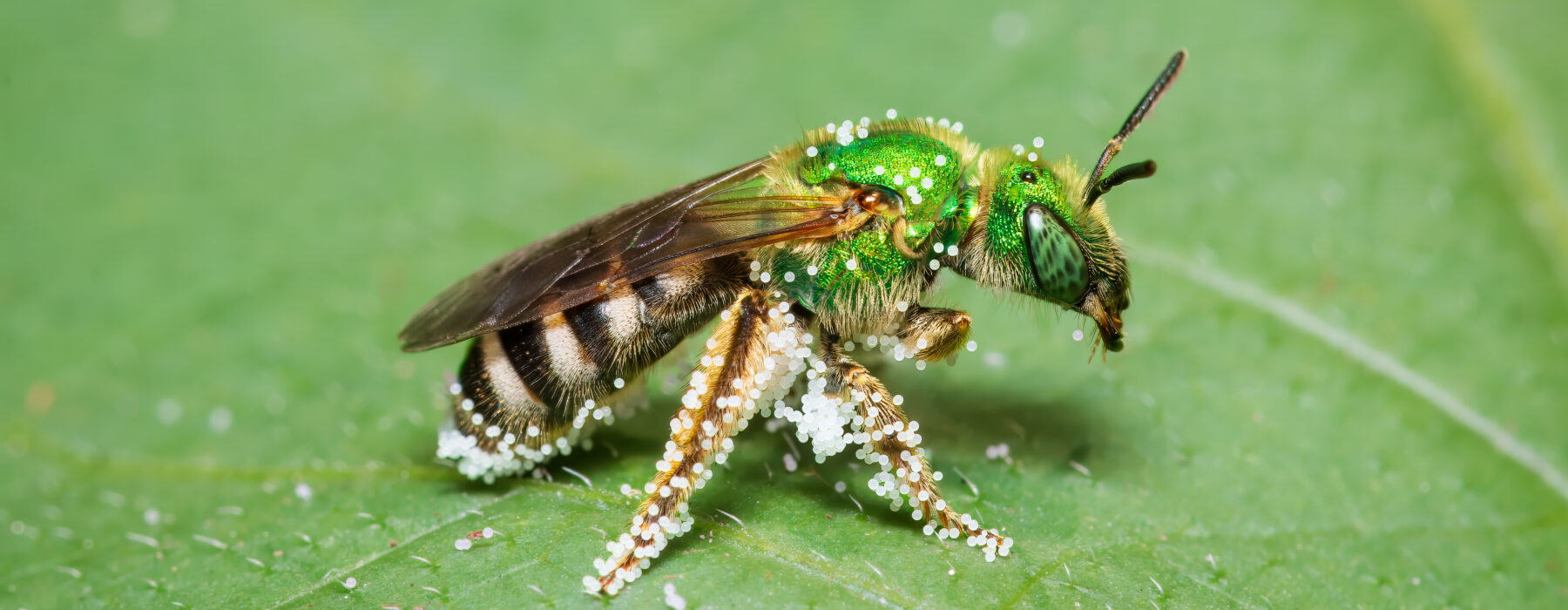
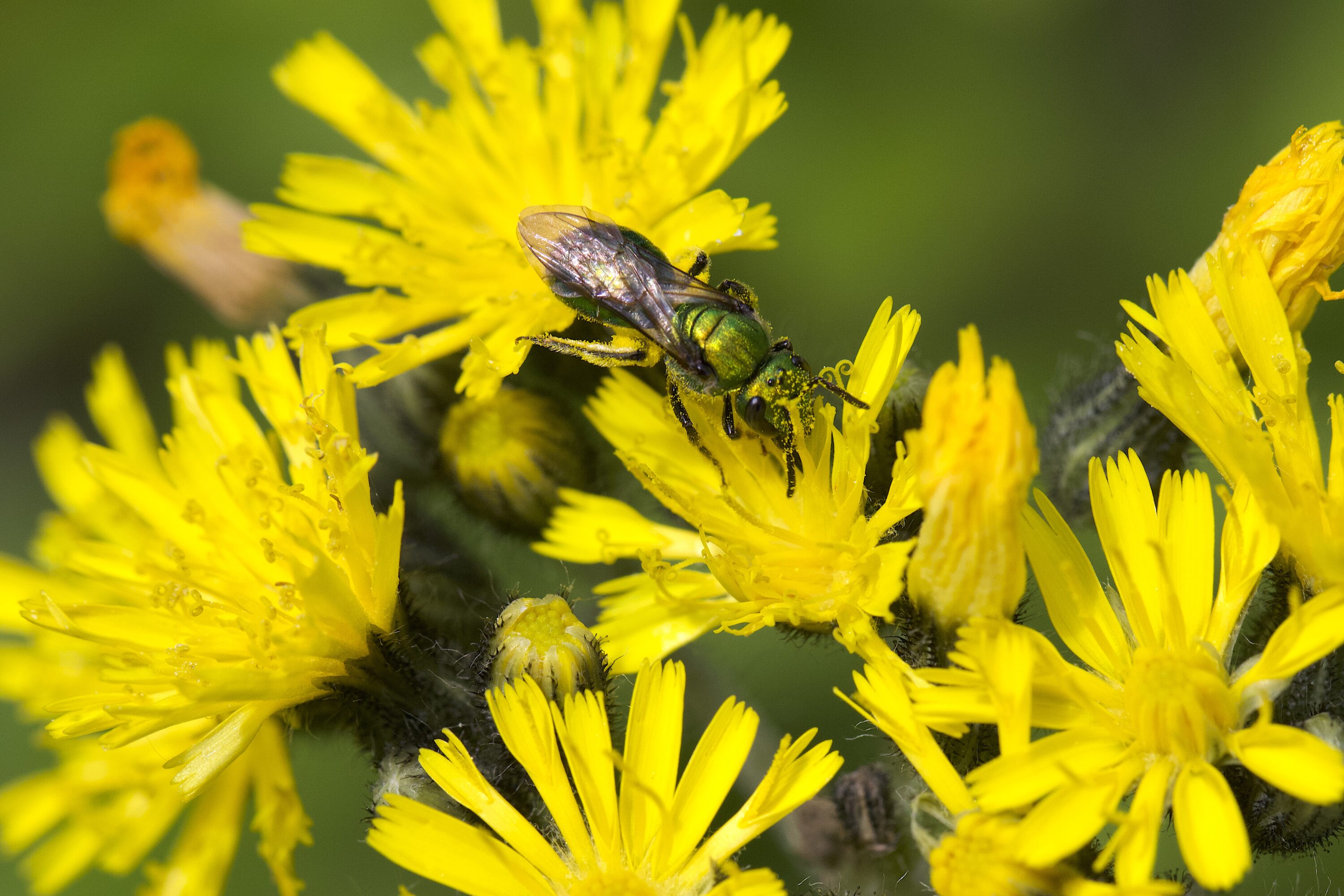
Honey Bees are a multi-billion dollar industry that is responsible for all the honey and almost all the almonds that we eat. While they are ubiquitous across most of the northeast, they are only one of more than 450 species of bees found in New England. Identifying many of these species in the field is notoriously difficult, yet great progress has been made in recent years and with a little practice it is possible to quickly identify most any bee to genus and many to species.
Since the natural history of the 39 genera in the state varies widely, putting a name on the bees around us is an important step in understanding how they are interacting with their environment and how our actions are impacting them – for the better or worse.
This course will include a mix of lecture, microscope work, and field observation – with a focus on field-based identification, natural history, and conservation. We will explore several local sites to find and discuss a wide range of genera and natural history strategies. Throughout the weekend we will touch on ways participants can make meaningful impacts for insect conservation at all scales – from the backyard to the grocery store.
Course Details
Course Objectives
- Explore bee-rich habitats – both natural and human dominated
- Practice common field techniques for capturing, observing, and photographing live bees
- View a diversity of bees up close using preserved specimens and microscopes
Course Goals
- Understand the diversity of bees (and other pollinators) on the landscape
- Learn to recognize the common genera and some more distinctive species
- Develop skills and resources for continued learning of bee identification
- Discuss how our everyday choices impact insects around the world and how we can create spaces for them to thrive in our own yards.
About the Instructor
Spencer Hardy is a birder turned inverter turned farmer and lead author of the first comprehensive checklist of the bees of Vermont. He has studied bees for the Vermont Center for Ecostudies since 2012, where continues to work on both bee conservation and education projects. For the majority of the growing season, he spends his time growing and selling native plants and uncommon fruit at The Farm Upstream, in Jericho, VT . Recently, much of his free time has been spent trying to teach his toddler how to hold (male) bumblebees.
Recommended Resources
- An Annotated Checklist of the Bees (Hymenoptera: Apoidea) of Vermont with Conservation Status and Natural History Notes (This will be provided before the course)
- Common Bees of Eastern North America
- https://watchingbees.com/
Meals & Lodging
We will provide coffee, tea, and light breakfast fare (pastries, etc.) each morning. Participants should bring their own lunches and snacks. Camping is available onsite by request.
Location & Timing
Course begins 9 AM on Saturday at North Branch Nature Center. Course begins on Sunday at a time of the instructor’s choosing. Course concludes by 5 PM on Sunday.
Physical Requirements
Participants must be able to travel up to 1 mile each day on dirt trails and off-trail on mostly flat terrain. Participants should be comfortable outside in potentially hot, cold, or wet conditions for long periods of time. Please reach out to us if you have any questions about mobility and/or other accessibility needs.
Academic Credit & Professional Development
This course may qualify for 1 graduate-level credit for an additional $200 course fee. All BioU courses are accredited by Castleton University. Participants interested in receiving credit must contact us in advance so we have time to arrange course accreditation. It is the student’s responsibility to ensure that home institutions will accept the credit. Participants pursuing academic credit will be required to complete an additional assignment above and beyond the course hours, including literature review, reflective writing, or a field-based project.
This course qualifies for 20 hours of professional development hours and continuing education units. Certificates of completion are provided at the conclusion of the course.
Financial Support
We have financial support available for most courses! Please head to our Financial Support page to learn more and request financial support. Support is limited, but we do our best to make sure that participants are not turned away for financial reasons. Since many courses fill quickly, we suggest submitting your financial support request after registering for the course if you are able. Or you may email us after submitting your request to ask us to temporarily hold a space for you.
Cancellation Policy
While we realize that unexpected circumstances arise that are out of our control, North Branch Nature Center cannot guarantee refunds for registrations cancelled within 30 days of the course. If a cancellation occurs within this window, NBNC will attempt to fill the space from our wait list and provide a full refund. If the course needs to be cancelled by NBNC, we will provide a full refund.