The Birds of Ecuador
BIRDING THE WEST SLOPE AND AMAZONIAN LOWLANDS

BIRDING THE WEST SLOPE AND AMAZONIAN LOWLANDS


$5,025 – Double Accommodations
$6,160 – Single Accommodations
10 participants max
 From the Andes to the Amazon, Ecuador is home to more than 1,600 bird species—nearly 15% of Earth’s avian biodiversity! Our eleven-day trip journeys from high-elevation cloud forests to the tropical lowlands and back up, encountering a huge range of ecosystems along the way. We’ll stay at a renowned rainforest birding lodge—accessible only by boat—nestled along a tributary of the Amazon River. We’ll explore forest reserves across western slope of the Andes, and conclude our journey atop the Continental Divide in the rare tropical alpine plateaus home to giant Andean Condors. Toucans, tanagers, hummingbirds, and antbirds are the order of the day on this fantastic itinerary, and this is just the warm-up!
(All photos by Finn Etter)
 Chip Darmstadt, Birding Ambassador and former executive director of North Branch Nature Center, is an avid neotropical birder and naturalist. Chip has guided birding trips around the US and around the world for 25 years, observing over 3,000 bird species along the way.
Andres De la Torre was born in Quito, Ecuador, surrounded by fantastic mountains and forests, to which he was attracted from a very young age. He became a mountain climber in his teens, which led him to start observing the beauty and diversity of life around him. It was clear for Andres that he wanted to spend his life as much as possible in the wilderness, which led him to study biology and natural sciences. Andres has been leading natural history trips for over 30 years, and throughout this time developed a love and passion for birds. He also loves other aspects of nature and culture, especially botany, volcanism, and history. In his free time, other than birding he loves to bike, hike and swim. Andres lives in Quito with his wife and daughter.
Flow of the Day: The itinerary is designed to maximize our experience with Ecuador’s great diversity of birdlife and ecosystems. We won’t be rushing from place to place to chase the largest species list possible. Our goal is to spend time appreciating the species we encounter at an enjoyable pace. This trip bases out of a couple of lodges for several days each, quelling that common travel feeling of always being “on the road.” That said, we will have many long days, especially those where we move long distances between lodges.
Birding walks begin in the early morning, and we travel slowly to allow for the best bird and wildlife encounters and observation. Afternoon plans may allow for some rest time at the lodges, though this is not always feasible when we are transferring between lodges or birding far from the lodge on a given day.
Climate: Be prepared for the temperatures to be chilly sometimes in the mornings (50s), and to reach the upper 80s in the middle of the day. In the tropics, it is wise to be prepared for both strong sun and sudden rain.
Physical Expectations: Much of the birding on this trip will be along roadsides or easily walked trails, but do expect some hilly and muddy conditions at times (but nothing extreme). Participants should be ready to expect conditions that may be hot, cold, dry, wet, or anything in-between. Participants must be able to carry and manage their own luggage, and be comfortable going up and down stairs.
Health Considerations: Please consult your physician before the trip for any recommended immunizations. Mosquitoes and other small, biting insects can sometimes be a nuisance, especially in the forested areas. Chiggers are found in the grassy areas. We suggest repellent for your face and hands as well as your clothing. Permethrin-treated clothing works well.
Parts of this trip will travel over 8,000 ft in elevation for short periods. We will spend extended periods at over 5,000 ft elevation. While these altitudes are not typically problematic, please consult your doctor if you are sensitive to high elevations.
Food: We’ll have a hot meal each night for dinner at the lodge or in town. Breakfasts and lunches will be a combination of sit-down meals and picnics, depending on where we are. Our dining arrangements are selected to have filling, tasty meals without spending our peak birding times sitting inside restaurants. Most dietary restrictions can be accommodated with advance notice. Please reach out to us for more details about dietary accommodations.
Lodging: All of the lodges where we’ll be staying are situated in or near ecological reserves. They are chosen for strategic access to great birding, rather than for the bells and whistles that come with more luxury resorts. That said, all lodges are clean and comfortable, and often allow for excellent birding right at the hotel property.
Transportation: We will be traveling in a small bus. Trip capacity is limited for traveling comfortably in our vehicle.
The trip cost includes:
Expert NBNC guide, Expert in-country bird guide, and an in-country driver
All accommodations
In-country flights
All food except airport meals
Entrance fees and park admissions
Transportation in a small, comfortable bus, including transfer to and from the airport
Use of high quality shared spotting scopes and binoculars
Pre-departure orientation gathering (virtual)
Carbon offsets for all airfare and travel to, from, and during this trip
The trip cost does not include:
International airfare
Airport meals
Airport transfers that are not part of the group transfers.
Travel insurance (highly recommended)
Alcoholic beverages, snacks and other incidentals
Guide and driver gratuities (recommended $10-20/day for guides and $5/day for driver per person)
Example Gear List:
Binoculars & field guides
Camera with extra batteries
Sunglasses, sunscreen, and hat
Flashlight or headlamp
Small alarm clock (or your smartphone’s)
Insect repellant
Small daypack
Folding stool if you get tired standing for long periods
Light field clothing of neutral colors (several pairs of long paints and light, airy long-sleeved shirts)
Rain gear and umbrella
Comfortable waterproof walking or hiking shoes and a second pair of light shoes or sandals
Fleece/sweater, hat, gloves, and long underwear for cold mornings and high elevations
Casual clothing for dinner
Handkerchiefs
A full packing list will be provided as the trip approaches. Your guides will carry spotting scopes.
NBNC is proud to announce that all of our trips are 100% carbon-neutral. This includes each traveler’s flights to and from this destination, as well as carbon emitted during the trip. We’re proud to be working directly with the Northeast Wilderness Trust’s Wild Carbon program. The carbon credits we purchase to offset our carbon emissions are used to permanently conserve forestland as wilderness. Learn more about this program at our Adventures Afar landing page.
 February 17: International arrivals and transfer to hotel near Quito. Flights typically arrive into Quito after dinner, and we’ll be waiting for you right at the airport to bring you to our accommodations in town, Hotel San Jose. For travelers wishing to arrive in town a day or two early, we can provide recommendations for activities in the Quito area.
 February 18: Birding drive to Mindo area. Our first stop will be at Yanacocha reserve, where we will spend the morning birding mixed flocks along a wide and flat trail through beautiful temperate forest; think Andean Guan, Ocellated Tapaculo, Crowned Chat-Tyrant, Barred Fruiteater, and Rufous Wren. We will also want to spend some quality time at the fruit and hummingbird feeders, which attract some fabulous high-elevation species like Sapphire-vented Puffleg, Great Sapphirewing, Glossy and Masked Flowerpiercers, and Black-chested and Scarlet-bellied Mountain-Tanagers. After a picnic lunch at the reserve we will work our way downslope along the upper stretches of the old Nono-Mindo road, towards the small village of Tandayapa, passing through some gorgeous subtropical forest where we will hope for our first looks at Toucan Barbet, Golden-headed Quetzal, Andean Cock-of-the-Rock, or even Beautiful Jay. We’ll aim to arrive at our lodge (where we will be spending the next three nights) in time for first looks at the active hummingbird feeding stations. Overnight Guaycapi Lodge.
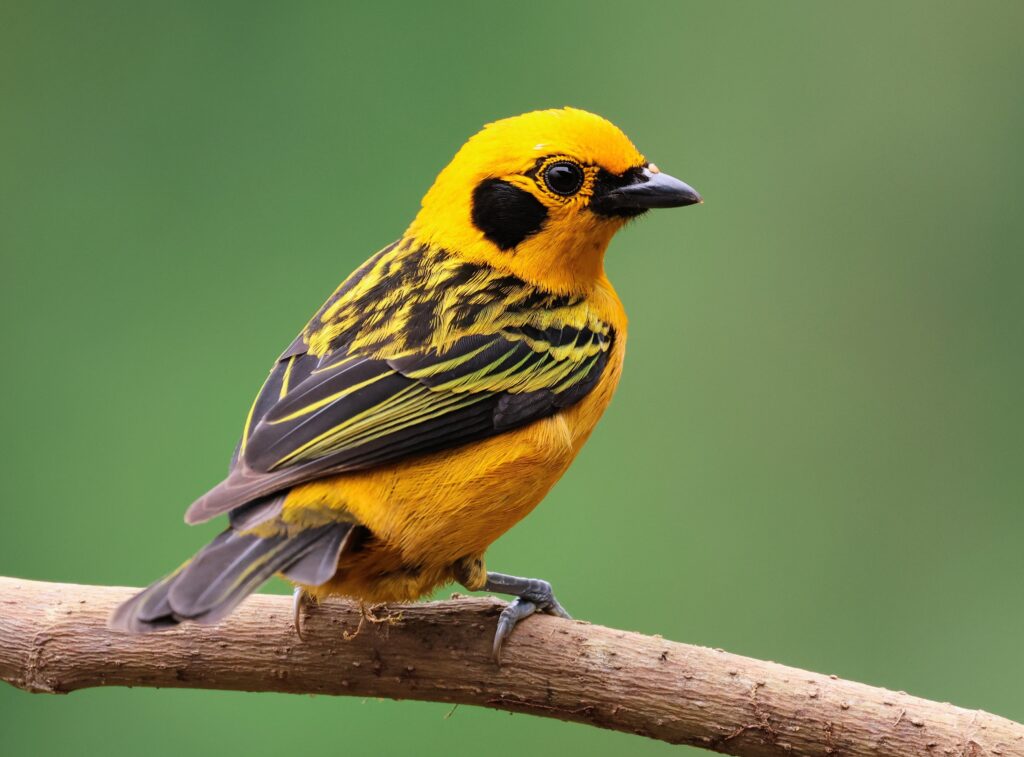 February 19: All-day birding Guaycapi and its surroundings with a visit to nearby feeding stations in the afternoon. We’ll play it by ear this day with a mix of trail and roadside birding right from the lodge, and just go where the birds lead us. Some of the bird targets include Wattled Guan, Black-and-chestnut Eagle, Crimson-rumped Toucanet, Crested Quetzal, Scaled Fruiteater, and multiple tanager species. Some of the mid-elevation hummingbirds that we are likely to see include Violet-tailed Sylph, Velvet-purple Cornet, Booted Racket-tail, Purple-bibbed Whitetip, and Brown Violetear, among many others. After the sun sets, we may head out in search of a night bird or two, such as Mottled Owl or Rufescent Screech-Owl right around the lodge, or even Lyre-tailed Nightjar slightly further afield. Night Guaycapi Lodge.
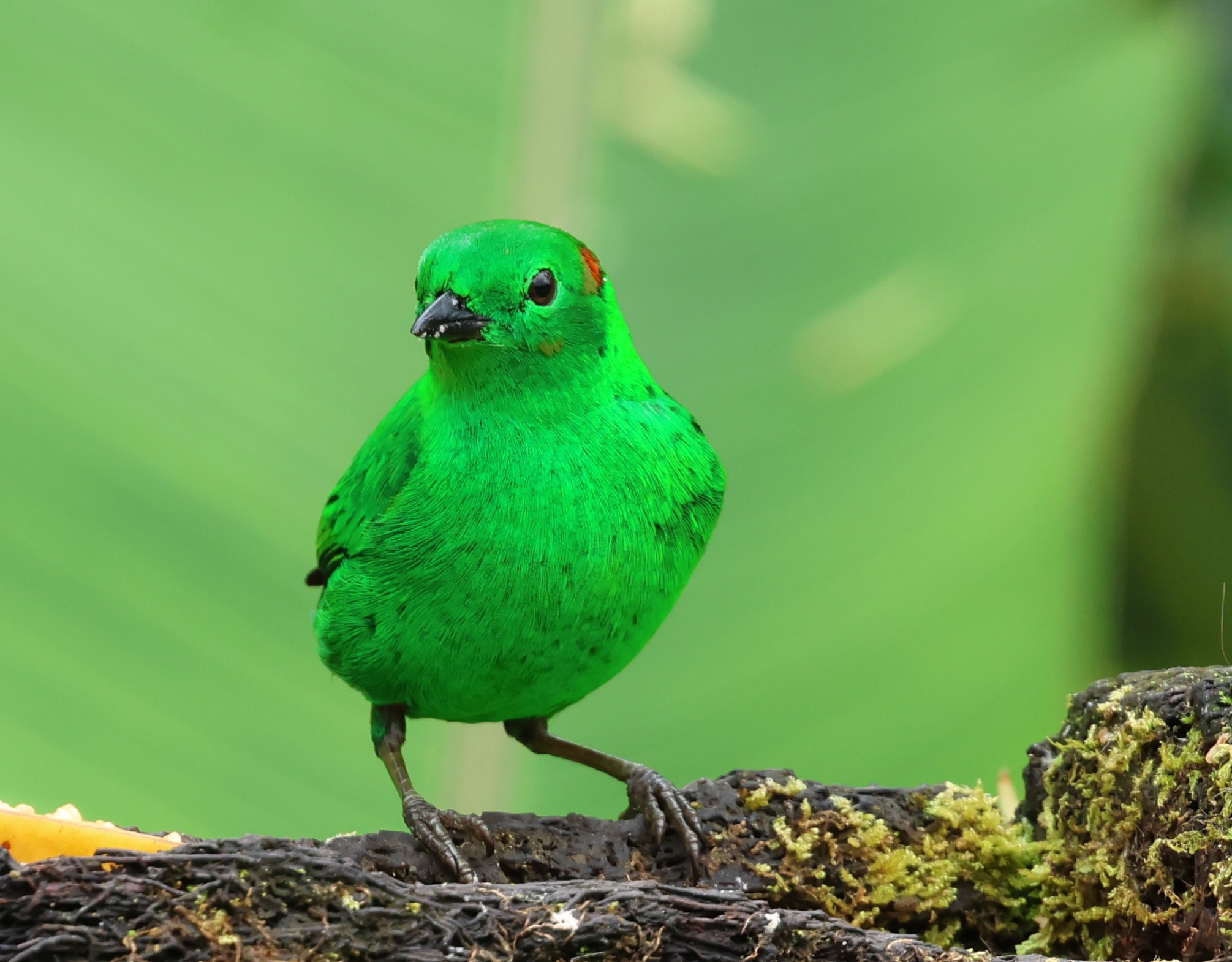
 February 20: We will rise early today in order to get to the Mashpi area. This zone is a fascinating area of very wet cloud forest, home to a particular set of hard-to-find birds that are near the southern edge of their range here. We will pay particular attention to the feeders at Mashpi Amagusa Reserve that attract an impressive array of species, including the Moss-backed and Rufous-throated Tanagers. With a bag lunch in tow, we are free to orchestrate our activities according to the weather and sightings. We will probably spend most of our time birding the roadsides, since roadcuts create ample edge habitat attractive to many birds. Other special species that we will be keeping an eye out for include Buffy Tuftedcheek, Orange-breasted Fruiteater, Black Solitaire, Glistening-green Tanager, Indigo Flowerpiercer, and if we are very lucky, Choco Vireo. Night Guaycapi Lodge.
 February 21: All-morning visit to Paz de Las Aves reserve. We will want to leave the lodge early to get to Paz de Las Aves in time to observe the active Andean Cock-of-the-Rock lek there. After some time with these marvelous birds, we will branch out and follow Angel Paz’s lead as he guides through the trails on his property for what we hope will be some very close encounters with some antpittas–Giant, Moustached, and Yellow-breasted—and other understory species that are hard to find in other contexts. In the afternoon we will bird our way back to Quito with birding stops along the way. Night Hotel San Jose.
 February 22-25: We’ll have three full days to scratch the surface of the avifauna in western Amazonia and get a feel for the complexity of rich habitats and microhabitats within easy reach of the lodge. One or two mornings we’ll visit the amazing canopy tower—an observation deck in a giant tree that emerges above the rainforest canopy—which offers privileged access to a world apart from the dark understory below. Flocks of oropendolas, toucans, aracaris, tanagers, and euphonias roam the canopy in search of fruit, Spangled and Plum-throated Cotingas glow from the treetops, raptors perch on vantage points to dry off in the morning sun, White-browed Purpletufts and Crowned Slaty Flycatchers sally for insects, numerous parrots and macaws fly by or drop in if there is a fruiting tree nearby, and many other species wander through the tower tree and canopy walk.
 A forest trail network offers access to another component of the avifauna, with woodcreepers, antbirds, and tinamous particularly well-represented, and we should also encounter Screaming Piha (a species as vocally striking as it sounds). A number of clay licks (or “saladeros”) nearby offer the spectacle of hundreds of parrots and parakeets coming in to nibble at the clay. We’ll also enjoy numerous canoe rides around the lagoons and creeks by the lodge, where the songs of Silvered and Plumbeous Antbirds reverberate through the flooded forest. Birds we’ll be seeking here include Orange-crested Manakin, and the striking Long-billed Woodcreeper, plus several species of monkeys and the impressive Giant River Otter.
The river-edge forest is home to numerous other species such as Masked Crimson and Magpie Tanagers, Rufous-headed Woodpecker, and Swallow-winged Puffbird. The oldest islands in the Napo River, only a few hundred yards away from the “mainland” even support their own distinct and varied avifauna! Island specialties we hope to see include Black-and-white Antbird, Olive-spotted Hummingbird, Oriole Blackbird and at least three species of spinetails, plus more “expected” river birds such as Capped Heron, Collared Plover, and Yellow-billed Tern. No two trips are ever the same here, but they are all always awe-inspiring. Nights at Sani Lodge.
 February 26: Today we’ll head back to Coca and fly to Quito. Depending on our flight time, we may have some time to bird around the lodge, and our boat ride back to Coca could yield some farewell looks at macaws and more. We’ll have a leisurely afternoon around our hotel and can enjoy birding the grounds. Scrub Tanager, Rusty Flowerpiercer, Vermillion Flycatcher, Golden Grosbeak, Giant Hummingbird and Blue-and-Yellow Tanager are just a few species that frequent the hotel property. Night Hotel San Jose.
 February 27: International flights are typically in the evening or later, so we’ll have one final big day to explore before heading home. Today we’ll head east out of Quito and ascend to the high and often windswept paramos of the Papallacta Pass. Among the many bird possibilities that we will be particularly on the lookout for include Andean Condor, Carunculated Caracara, Rufous-bellied Seedsnipe, Ecuadorian Hillstar, Tawny Antpitta, Many-striped Canastero, White-chinned Thistletail, Red-rumped Bush-Tyrant, Brown-backed Chat-Tyrant, some interesting seedeaters, and even Giant Conebill, with a bit of luck. If there were a day to have your camera ready, this would be it – on clear days the scenery is spectacular, with superb views of the snow-capped Volcán Antisana, and endless high Andean mountain scenes harboring a backdrop of textures that make for an unforgettable birding setting.
 Before lunch we’ll start to work our way down the east slope into the Amazonian drainage and towards Guango Lodge. On the way we will pass through some beautiful high-elevation temperate forests where we may have time to stop and soak in this birdy zone; some of the possibilities include Black-chested Buzzard-Eagle, Viridian Metaltail, Buff-breasted Mountain-Tanager, just to name a few. We’ll have lunch at Guango Lodge and have our first crack at the hummingbird feeders that will be dripping with species such as Tourmaline Sunangel, Sword-billed Hummingbird and White-bellied Woodstar.
Guango Lodge sits up and over the continental divide, right in the heart of the high elevation temperate zone, and is surrounded by beautiful mossy forest, and fancy birds. The birding can be excellent at any time of the day, especially if you encounter an active mixed flock! Some of the more interesting glamour birds to keep an eye out for around the lodge include Torrent Duck, Gray-breasted Mountain-Toucan, Masked Trogon, Turquoise Jay, Hooded and Lacrimose Mountain-Tanagers, Slaty Brush-Finch, Gray-hooded Bush-Tanager, and Northern Mountain-Cacique. On the trails around Guango we frequently run into some of the best temperate forest flocks on any of our tours in Ecuador; in a matter of minutes it isn’t uncommon to see White-banded Tyrannulet, Black-capped and Black-eared Hemispingus, Pale-naped Brush-Finch, and even Plushcap. With some luck we could even run into Andean Guan, Dusky Piha, or even Red-hooded Tanager.
It will be hard to tear ourselves away, but by mid-afternoon we head back to Quito and the airport in time for our international departures.
All of our trips have a standard payment plan of an initial deposit plus two installment payments. Our office will reach out with an invoice for the two installments before it is due.
We understand that incidents and emergencies arise that may force you to cancel your trip. However, NBNC invests considerable time and often nonrefundable deposits to lodges and local contractors to secure our rooms and programming. NBNC aims to be as flexible as possible in our refund policy, but a full refund of your payments may not be possible after the dates indicated. All cancellations must be made in writing.
We advise travelers to purchase independent travel insurance through companies such as Allianz when booking a trip to recover reimbursement in the event of a cancellation that does not qualify for a refund as outlined in the policies above.