Birds & Wildlife of Brazil
The Pantanal & Atlantic Rainforest
The Pantanal & Atlantic Rainforest


$6,000 – Double Accommodations
$6,790 – Single Accommodations
11 participants max
The huge lowland plains of the Mato Grosso in Brazil, seasonally inundated during the rainy season, is known as the “Pantanal,” meaning “Swampland.” It is the shrinking of the wetlands during the dry season that creates the spectacular concentrations of wildlife for which the area has become world famous. The Pantanal is on three major migratory routes for birds, and as the water level retreats, considerable numbers of fish and amphibians become trapped in pools, providing a rich source of food unmatched for wildlife watching in South America. Our tour is timed to coincide with maximum birdlife, abundant flora, and the most tolerable weather conditions. The Pantanal is also home to charismatic mammals such as Giant River Otter, Anteaters, and Jaguar. Flying into and out of Sao Paolo also gives us the opportunity to explore the Atlantic Rainforest near the coast. After a thorough exploration of the Pantanal, we spend three days birding this rich environment, enjoying the contrast in both stunning scenery and wildlife.
 Flow of the Day: The itinerary is designed to maximize our experience with the great diversity of birdlife and ecosystems that Brazil offers. We won’t be rushing from place to place to chase the largest species list possible, but we will be on the move—there is little downtime on this itinerary. Our goal is to spend time appreciating the species we encounter at an enjoyable pace. Birding walks begin in the early morning, and we travel slowly to allow for the best bird and wildlife encounters.
Arriving early in Sao Paolo is encouraged! If you’d like some advice and where to go, talk to Chip about options.
Afternoon plans sometimes allow for some afternoon rest time at the lodges, though this is not always feasible when we are transferring between lodges and landscapes.
Physical Requirements: A moderate level of fitness is required. We will not be doing anything too strenuous, but participants should be able to hike on moderate terrain up to 3 miles per day, and be ready to expect conditions that may be hot, cold, dry, wet, or anything in-between.
Climate: Temperatures are generally hot (or very hot) and sunny in the Pantanal by late morning, with temperatures in the daily range 75-95°F. Rain is possible at any time and may be prolonged on occasions. The weather in the Atlantic Rainforest is more variable and typically a bit cooler, especially at either end of the day.
Health Considerations: Please consult your physician before the trip for any recommended immunizations. Mosquitoes can sometimes be a nuisance. We suggest repellent for your face, hands, and clothing. Safe drinking water is provided while on tours. All meals will be safe to eat, and your guides will alert you to any occasions when certain menu items should be avoided.
Lodging: Accommodations in the Pantanal and Atlantic Rainforest are in small comfortable hotels, chosen for strategic access to great wildlife, rather than for the bells and whistles that come with more luxury resorts. That said, all lodges are clean and comfortable.
Meals: We’ll have a hot meal each night for dinner at the lodge or in town. Breakfasts and lunches will be a combination of sit-down meals and picnics, depending on where we are. Our dining arrangements are selected to have filling, tasty meals without spending our peak birding times sitting inside restaurants. Most dietary restrictions can be accommodated with advance notice. Please reach out to us for more details about dietary restrictions.
Transportation: The land transportation is in a comfortable bus. Given the large distances we’ll be covering, there will also be two in-country flights on commercial airlines.
Chip Darmstadt, Birding Ambassador and former executive director of North Branch Nature Center, is an avid neotropical birder and naturalist. Chip has guided birding trips around the US and around the world for 25 years, observing over 3,000 bird species along the way. After first working as a field biologist in Monteverde, Costa Rica, back in 1990, Chip has had the pleasure of bringing hundreds of nature lovers to the country over the years. Chip also designed and led NBNC’s Brazil trip in 2024.
Chip will co-guide this journey with longtime bird guide Mario Mosquiera of Clark Expediciones, an Argentina-based ecotravel company that has been a force behind conservation of the imperiled Yungas forests in the northern Andes. Mario led NBNC’s Brazil trip in 2024.
We will also be joined throughout the adventure by by expert in-country local bird guides.
The trip cost includes:
The trip cost does not include:
Example Gear List:
Binoculars & field guides
Camera with extra batteries
Sunglasses, sunscreen, and hat
Flashlight or headlamp
Small alarm clock (or your smartphone’s)
Insect repellant
Small daypack
Folding stool if you get tired standing for long periods
Light field clothing of neutral colors (several pairs of long paints and light, airy long-sleeved shirts)
Comfortable walking or hiking shoes and a second pair of light shoes or sandals
Fleece, hat, and gloves for cool mornings
Casual clothing for dinner
Handkerchiefs
A full packing list will be provided as the trip approaches. Your guides will carry spotting scopes.
NBNC is proud to announce that all of our trips are 100% carbon-neutral. This includes each traveler’s flights to and from this destination, as well as carbon emitted during the trip. We’re proud to be working directly with the Northeast Wilderness Trust’s Wild Carbon program. The carbon credits we purchase to offset our carbon emissions are used to permanently conserve forestland as wilderness. Learn more about this program at our Adventures Afar landing page.
 Day 1 (September 30) – Depart the US
Today we depart on overnight flights from the United States to São Paulo. We will arrive in Brazil on the morning of October 1.
 Day 2 (Oct 1) – Cuiaba Birds and Mammals
Following an early morning arrival in Sâo Paulo we board a domestic flight to Cuiaba, the capital of the Mato Grosso where we stay for one night. We should arrive at our hotel for lunch then in the afternoon will get an opportunity to stretch our legs and gain an introduction to Brazilian natural history in nearby surroundings. A population of the rare Pantanal Marmoset inhabit this area known as Varzea Grande and the birdlife is both colorful and plentiful with representatives from some of the Neotropical families such as macaws and tanagers, that we will be seeing throughout the tour.
 Day 3 & 4 (Oct 2-3) – Pixaim River
We transfer by road to spend two nights at a private ranch near the Pixaim river which will be our base to explore the upper regions of the Pantanal floodlands.
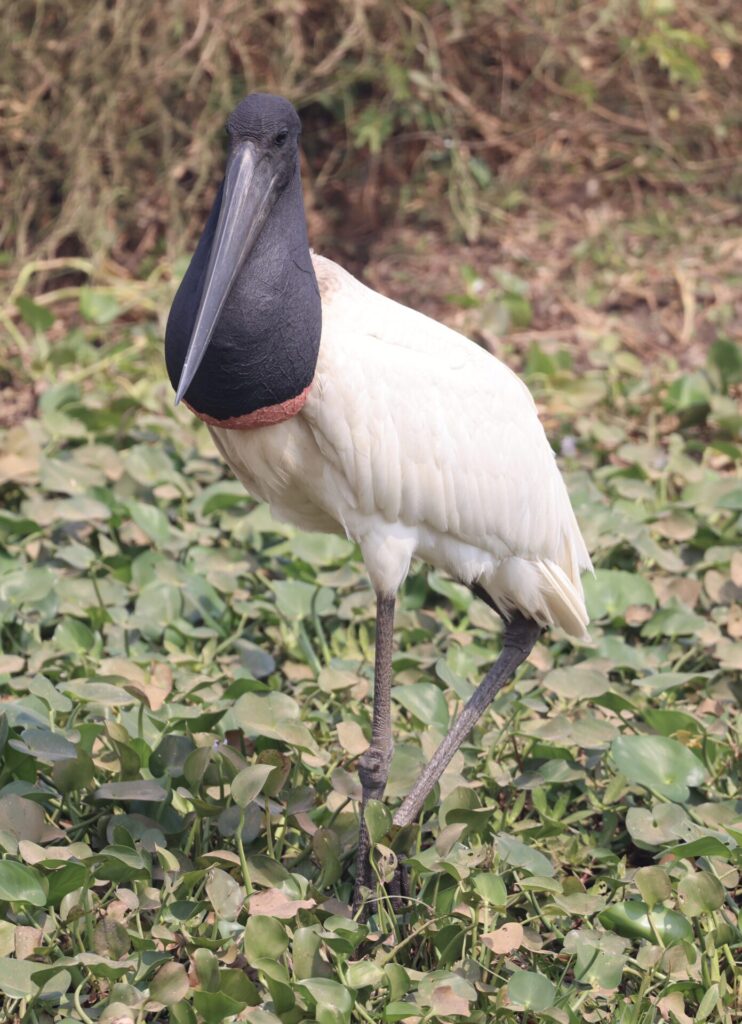
Here we’ll explore the ‘Transpantaneira’, an earth causeway that traverses 130 kilometers of wetlands and crosses 140 wooden bridges. This will be our main source of access to the marshes and regular stops at suitable vantage points. In the vicinity of Pixaim we will see considerable numbers of cormorants, herons, storks and ibises, all taking advantage of the rich pickings left by the retreating floods. One of the most striking of these birds is the huge Jabiru stork, a scarce bird throughout most of its range but a familiar sight in the Pantanal.
The most visible mammal is the Capybara, the world’s largest rodent, which occurs in large family groups browsing the vegetation under the watchful eyes of numerous Caimen. The rare Giant River Otter is another resident of the waterways and we will take a boat trip on the river to search for this species, an excursion that also offers a good chance of finding some of the more furtive wetland birds such as the enigmatic Sunbittern and Sungrebe. Other mammals live in the drier stretches of countryside where fortunate observers may occasionally see Lesser and even Giant Anteaters feeding on termites. Brown Brocket Deer and Marsh Deer both inhabit the Pantanal, and spotlighting along the Transpantaneira may yield sightings of Crab-eating Fox, Crab-eating Raccoons and several other creatures without crustacean prefixes!
Several species of small cats and the Brazilian Tapir inhabit the Pantanal, but as with Jaguars, good fortune is needed to observe one of these beautiful and secretive mammals.
Much of this northern section of the Pantanal is covered in scrubby woodland and open, dry areas with patches of gallery forest where birdlife ranges from Greater Rheas, Red-legged Seriemas and the very localized Long-tailed Ground-Dove in drier areas, to the similarly localized Chestnut-bellied Guan and Matto Grosso Antbird in damper, more heavily wooded contexts. We will spend our time here covering a broad cross-section of habitats to maximize our chances of seeing the greatest diversity.
Birds of prey are well represented throughout the Pantanal, with the ubiquitous Snail Kite and Black-collared Hawk being two of the most frequently seen raptors. We are likely to encounter them perching by open water on the lookout for snails and fish.
 Day 5 & 6 (Oct 4-5) – Porto Jofre
From Pixaim we will drive 90 kilometers to Porto Jofre at the end of the Transpantaneira for a two-night stay in a very nice lodge at the edge of the Rio Cuiaba. Travel is slow along this highway under the best of circumstances, which will give us the opportunity to look out for some uncommon roadside birds such as the beautiful Scarlet-headed Blackbird. As we get closer to Porto Jofre, open wetlands become more extensive and we will stop to admire the ranks of wetland birds such as Limpkins, Maguari Storks and many others.
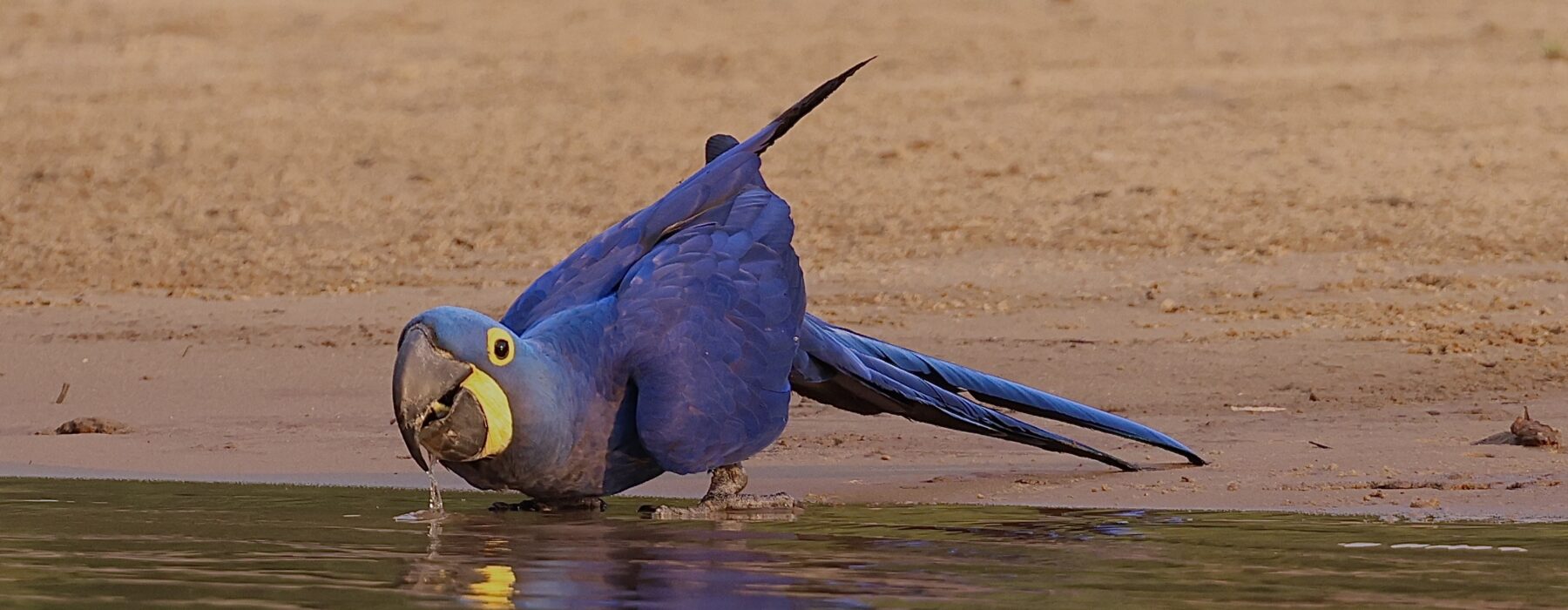
One of the rarest residents of the Pantanal is the Hyacinth Macaw, the world’s largest parrot. This magnificent bird is most often seen near Campo Jofre, and after settling into our hotel we will take an evening stroll to a roosting area of this spectacular species. As dusk settles, huge Nacunda Nighthawks begin their evening activities.
As at Pixaim, we will spend our time at Porto Jofre covering a mixture of habitats, either on foot, or via short road journeys along the Transpantaneira.
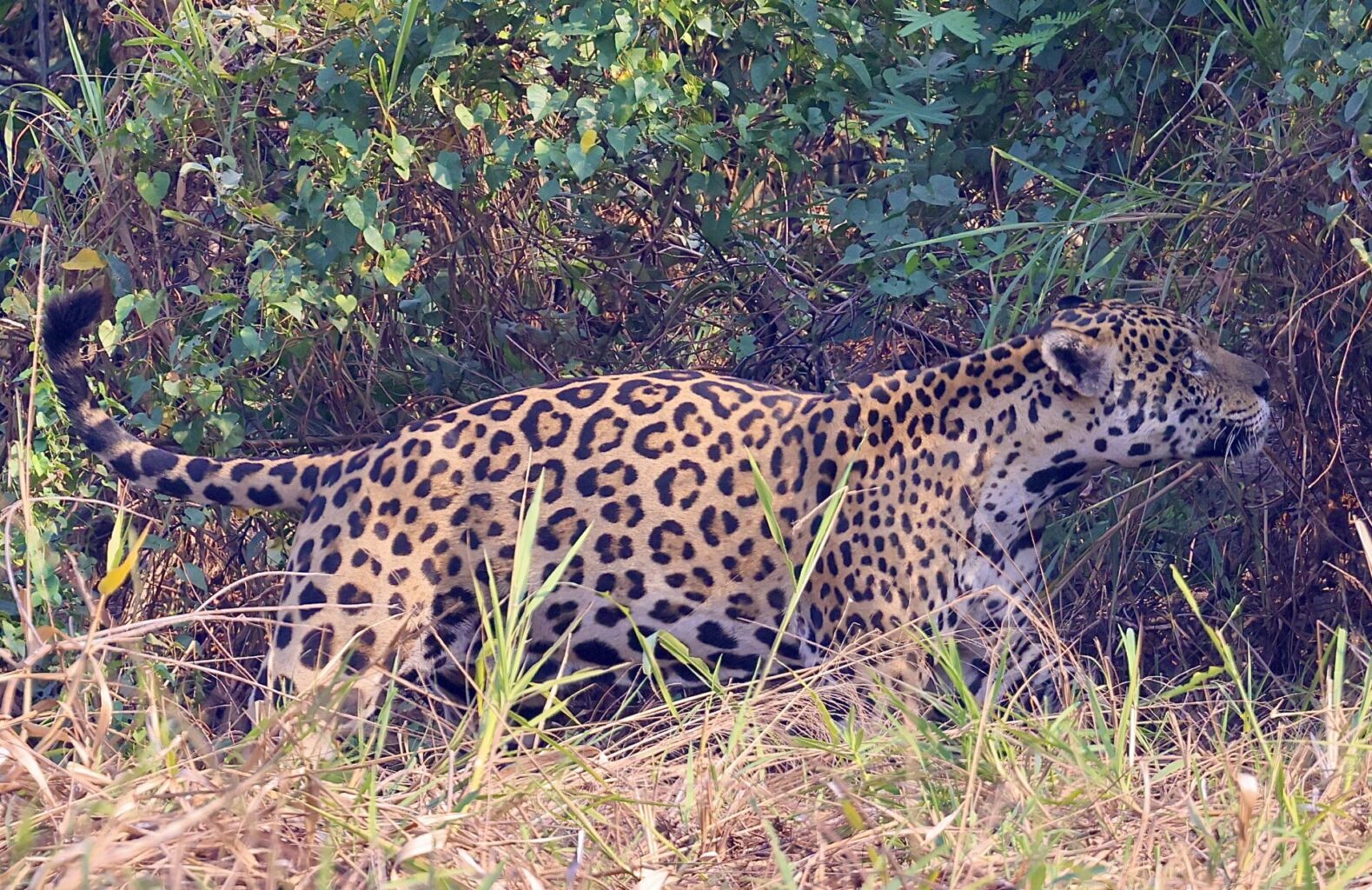
We will also take a boat trip on the Rio Cuiaba where Black Skimmers roost on the sandbars in the company of numerous Large-billed and Yellow-billed Terns, Collared Plovers, and Pied Lapwings. A particular focus during this boat trip will be Jaguars, as this area has become one of the most reliable sites in the world for this impressive cat, which has a tendency to lie out near the water’s edge. Encounters with a Jaguar are a good possibility, but never guaranteed, even though the boatmen are primed with information on the most recent sightings.
 Day 7 & 8 (Oct 6-7)
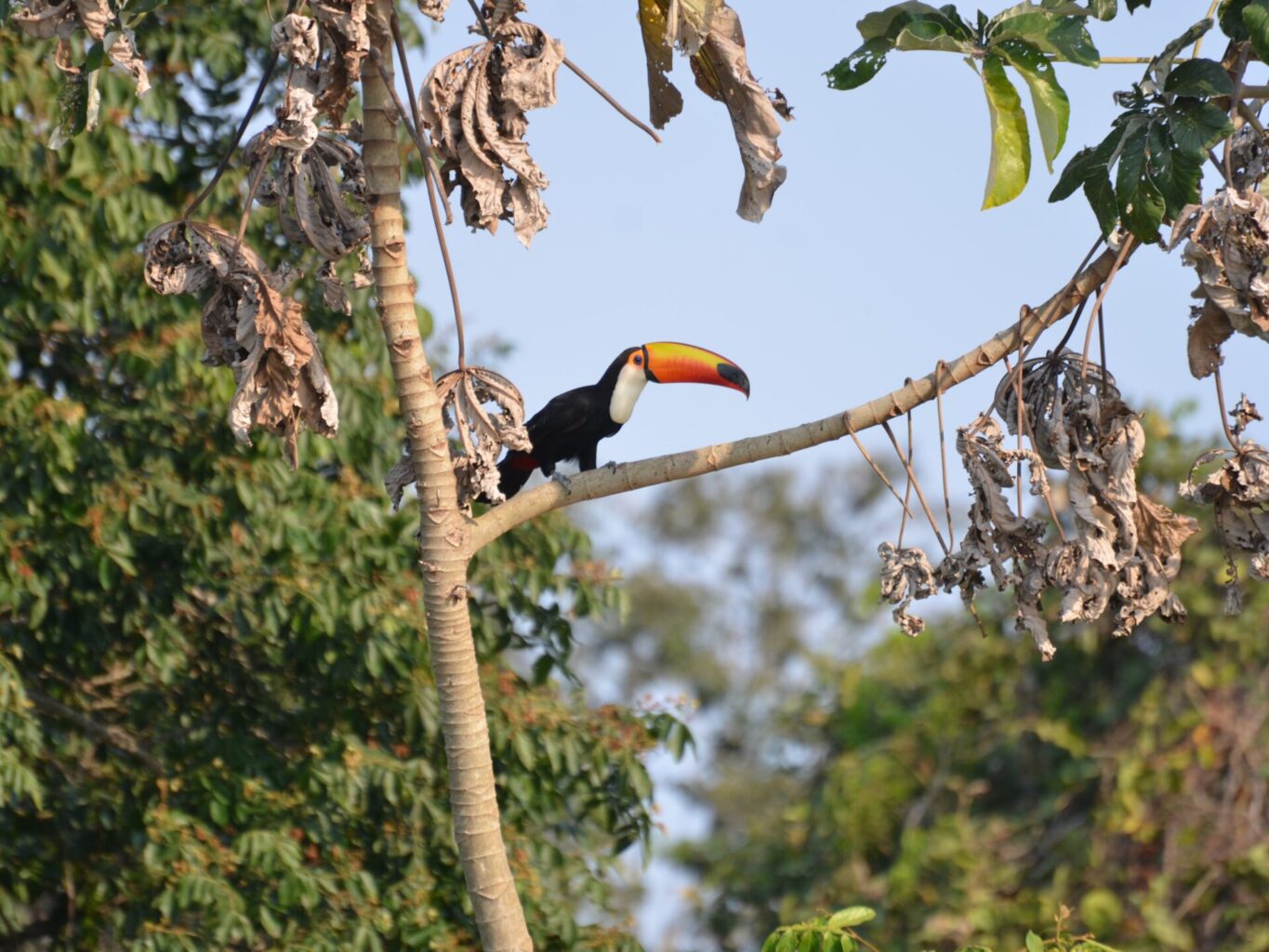
After some morning birding, we depart Porto Jofre for our last destination in the Pantanal – Pouso Alegre Lodge. This magical place is rustic but absolutely fascinating with a wealth of bird and mammal species. Great Rufous Woodcreeper, Toco Toucan and Yellow-collared Macaw, are among the many species we’ll encounter.The guan family is especially well represented on the ranch, including Chaco Chachalaca, Chestnut-bellied Guan, Red-throated Piping-Guan and and the stunning Bare-faced Curassow. Hyacinth Macaw nest on the property and we’re likely to get close looks at this beautiful and endangered parrot.
A visit to a watering hole in the evening can yield some thrilling sightings of both mammals and birds. Brazilian Tapir, Tayra (a large member of the weasel family), Undulated Tinamou and Sunbittern frequent the watering hole, while Bat Falcon and Collared Forest-Falcon are found in the surrounding forest. As night falls we’ll listen for Common Parauque and Little Nightjar.
 Day 9 (Oct 8) – Transfer day
Today we depart for Cuiaba and board a flight to São Paulo. We’ll keep an eye out for Red-legged Seriema and Greater Rhea as we leave the Pantanal, in case we haven’t seen either of those species yet. Upon arrival in São Paulo we drive about 2.5 hours to our lodge in the Ubatuba area east of São Paulo for a three night stay in the Mata Atlantica region.
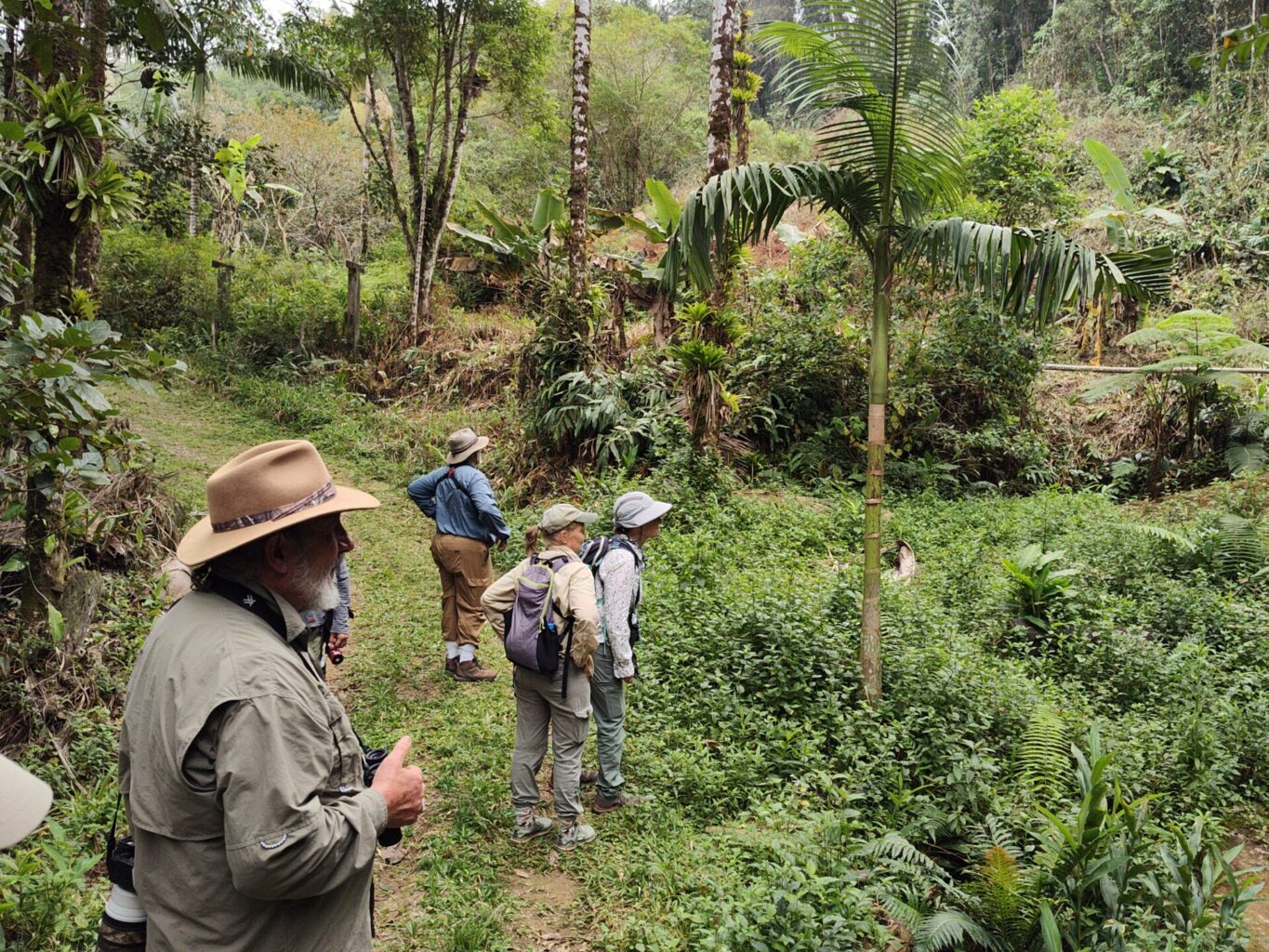 Day 10 & 11 (Oct 9-10) – Ubatuba and the Atlantic Rainforest
The Atlantic Rainforest region of Brazil – also known as the Mata Atlantica – is one of the most endangered biomes in the world, with only 12% of its original area remaining. The ecosystem also boasts very high endemism: 40-60% of its birds, plants, and mammals are found nowhere else on earth. The mountains of the Serra do Mar extend right down to the coast in the Ubatuba area, making for a beautiful and productive area to explore the Atlantic Rainforest.
This region is one of the best locations to find the endangered Buff-throated Purpletuft, a canopy species related to becards. Woodpeckers are numerous, including Robust, Yellow-fronted, and Yellow-throated, as are the lovely manakins, including Swallow-tailed, White-bearded, and Pin-tailed. We’ll also keep our eyes (and ears!) open for Bare-throated Bellbird, which sings its loud, bizarre song from the tallest trees in the canopy.
Hummingbird diversity will be much higher in this region compared to the Pantanal, including such lovely species as Black Jacobin, Festive and Frilled Coquette, Saw-billed and Reddish Hermit and Brazilian Ruby. A visit to a private hummingbird garden will allow for some close and easy viewing.
Flashy species like toucans and tanagers—Red-necked, Green-headed, Brazilian, Ruby-crowned, Rufous-headed, and Azure-shouldered, just to name a few—often steal the show, but we’ll also search for the large number of antbirds that frequent the area. Many of the antbird species here are relatively easy to see compared to other rainforest regions in South America. Some of the specialties include Scaled Antbird, Ferruginous Antbird, Spot-breasted Antvireo, Salvadori’s Antwren, Tufted and Spot-backed Antshrikes, and Star-throated Antwren. We’ll also be on the watch for two unusual and skulky members of the tapaculo family, Slaty Bristlefront and Spotted Bamboowren.Tapaculos have a reputation for their uniform appearance, but these two stand-outs can only be found in the Atlantic Rainforest of Brazil.
 Day 12 (Oct 11) – Return to São Paulo
Today we’ll return to São Paulo, perhaps after some morning birding if flight schedules allow. We will arrive at the São Paulo international airport in time to catch return flights to the United States.
All of our trips have a standard payment plan of an initial deposit plus two installment payments. Our office will reach out with an invoice for the two installments before it is due.
We understand that incidents and emergencies arise that may force you to cancel your trip. However, NBNC invests considerable time and often nonrefundable deposits to lodges and local contractors to secure our rooms and programming. NBNC aims to be as flexible as possible in our refund policy, but a full refund of your payments may not be possible after the dates indicated. All cancellations must be made in writing.
We advise travelers to purchase independent travel insurance through companies such as Allianz when booking a trip to recover reimbursement in the event of a cancellation that does not qualify for a refund as outlined in the policies above.